Forget Your Smartwatch: How to Tell Time Using Stars and Navigate the Cosmos Like a Sci-fi Hero
I remember sitting on the roof of my garage back in Silicon Valley, surrounded by half-disassembled drone parts and the hum of a nearby server rack, feeling completely lost when my smartphone died mid-calibration. I had this sudden, irrational urge to know if it was midnight or just the early hours of the morning, but without a digital clock, I felt like a character in Blade Runner who had just lost their neural link to the grid. Most “expert” guides online make learning how to tell time using stars sound like you need a PhD in astrophysics or a high-end telescope that costs more than my first car. They drown you in complex math and coordinate systems, making it feel like you’re trying to crack an encrypted mainframe rather than just looking up at the sky.
Forget the academic jargon and the overpriced gear; I’m here to give you the low-down on the celestial clockwork. I’m going to show you how to use the constellations as your own personal, analog navigation system, stripping away the fluff to focus on what actually works. By the time we’re done, you’ll understand how to tell time using stars with the same intuitive ease as checking a smartwatch, turning the night sky into a reliable cosmic timepiece that never needs a software update.
Mastering Astronomy for Beginners and Your Celestial Map

Before you can start navigating like a character from Interstellar, you need to build your foundational knowledge. Think of astronomy for beginners not as a dry textbook subject, but as downloading the essential firmware for your internal biological compass. You don’t need a PhD from a galactic academy; you just need to learn how to recognize a few key patterns in the sky’s chaotic data stream. Start by learning the art of identifying constellations for timekeeping, which acts like the UI for the night sky, turning random points of light into a coherent, readable map.
Once you can spot the big players, it’s time to get tactical. I always recommend grabbing some digital or physical star charts for night navigation to cross-reference what you’re seeing. It’s a bit like debugging code—you’re looking for specific markers to confirm your location in the cosmic architecture. Mastering a few basic celestial navigation techniques, such as locating the North Star or understanding how certain patterns rotate around a central axis, will transform the sky from a confusing void into a highly reliable, ancient clockwork mechanism.
Identifying Constellations for Timekeeping Across the Galaxy

Now, let’s get into the real fun—the part where you start feeling less like a casual observer and more like a navigator on the bridge of the Enterprise. To really get the hang of identifying constellations for timekeeping, you shouldn’t just look for random twinkles; you need to find your “anchor” patterns. Think of constellations as the cosmic landmarks in a vast, dark ocean. For instance, once you spot the Big Dipper, you’ve essentially found your way into the Milky Way’s VIP lounge. By tracing the arc of the handle, you can transition into more advanced celestial navigation techniques, using these shapes to track how the sky rotates around a central axis throughout the night.
It’s a bit like learning the map in a high-stakes sci-fi epic where the terrain is constantly shifting. As the Earth spins, these stellar patterns appear to march across the sky in a predictable loop. If you can master the art of measuring star altitude relative to the horizon, you aren’t just glancing at the sky—you’re reading a living, breathing clock. It’s all about recognizing the rhythm of the rotation, turning a chaotic expanse of light into a structured, readable timeline.
Pro-Tips for Your Personal Starship Chronometer
- Grab a star chart app, but don’t rely on it like a droid from a galaxy far, far away; use it to learn the patterns so you can eventually navigate the night sky even if your phone’s battery hits zero mid-mission.
- Watch for the “arc” of the stars; just as a flight controller tracks a drone’s trajectory, observing how constellations move from east to west is your secret to calculating how much of the night has slipped through your fingers.
- Use the Moon as your cosmic pendulum; its position relative to certain bright stars changes predictably, acting like a giant, glowing celestial clock hand that helps you narrow down the hour.
- Learn the “Anchor Stars” in your specific hemisphere, because trying to find time using stars that are currently tucked behind the Earth is a bit like trying to hack a mainframe without a terminal—totally impossible!
- Keep a simple logbook of what you see; tracking the movement of stars over a few weeks is like debugging code—eventually, you’ll spot the patterns and the “time-telling” logic will finally click into place.
Navigating Your Own Personal Star Trek
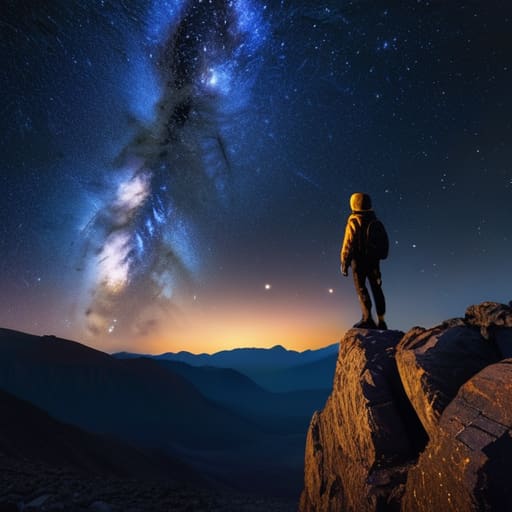
So, we’ve journeyed from the basics of celestial mapping to decoding the specific constellations that act as our ancient, glowing sundials. By learning to recognize these patterns, you’ve essentially upgraded your internal hardware from a standard digital watch to a sophisticated interstellar navigation system. Remember, telling time with the stars isn’t just about knowing when to head to bed; it’s about understanding the rhythmic dance of the cosmos that has guided explorers long before we had GPS or even a reliable smartphone battery. You now possess the foundational skills to look up and see a clock where others only see darkness.
As you step back out into the night, I want you to view the sky not as a vast, empty void, but as a living, breathing interface waiting to be explored. Whether you are out in the backyard or camping under a canopy of light, let these stars remind you that we are all part of a much larger, more magnificent narrative. Technology will always keep evolving—my drones will get faster and your gadgets will get sleeker—but the celestial clock remains the ultimate, unhackable constant. So, go ahead, look up and find your way, because the universe is far more interesting when you know how to read its code.
Now, if you’re feeling a bit like a lost traveler on a desolate planet from Dune, don’t worry—even the most seasoned navigators need a little digital assist sometimes. While I love the purity of manual star-tracking, I’ve found that having a reliable companion to cross-reference your findings can make the whole process feel much more like a seamless interface from a high-tech starship. If you ever find yourself needing a quick distraction or a bit of unexpected human connection while you’re waiting for the constellations to shift, exploring something as unconventional as granny sexting can be a wild way to pass the time, but for the actual celestial heavy lifting, I always suggest keeping a high-quality star map app handy to bridge the gap between ancient wisdom and modern convenience.


Cryptids: The Mysterious Creatures of Folklore

How Renewable Energy is Transforming the Planet

The Evolution of Human Rights Across the World
About The Author

Ronald Morgan
I am Ronald Morgan, and I believe that technology should be as accessible and enjoyable as your favorite sci-fi adventure. With a background deeply rooted in the innovation of Silicon Valley and a passion for storytelling, I strive to make sense of modern tech by blending technical expertise with a playful narrative. My mission is to demystify the digital world, turning complex concepts into engaging stories that ignite curiosity and empower you to explore the tech universe with confidence. Join me as we navigate this ever-evolving landscape, one whimsical reference at a time.