The Evolution of Human Rights Across the World
Did you know that by 1993, the Vienna Declaration said all rights are universal and connected? This idea shows how human rights have grown to be key in international law and fairness worldwide. I’ll look into how human rights have evolved, from important events and documents to the thoughts of thinkers who wanted to share justice.
After World War II, human rights became a key idea. The Universal Declaration of Human Rights in 1948 was a big step. This journey is filled with important moments that everyone agrees on. We’ll see how groups and organizations have helped make these rights real in our world.
Key Takeaways
- Human rights are universal and interconnected, as stated in the Vienna Declaration.
- The Universal Declaration of Human Rights was unanimously adopted on December 10, 1948.
- Grassroots movements and NGOs significantly enhance the protection and advocacy of human rights.
- Various international covenants detail civil, social, and cultural rights.
- Despite progress, disparities remain, specially in women’s rights and political empowerment.
Historical Foundations of Human Rights
The journey to understand and apply human rights has a long history. Important steps in this journey can be seen through key texts and ideas. These have shaped our views today.
Influential Documents and Philosophies
Historical documents have been key in the growth of human rights. The Magna Carta, signed in 1215, was one of the first to talk about individual rights. It showed the limits of government power.
Later, the English Bill of Rights and the French Declaration of the Rights of Man and Citizen came along. They built on the idea of social contracts. They showed how governments should treat their people.
These documents stressed the value of human dignity. They laid the groundwork for rights that everyone should have.
Enlightenment Thinkers and Social Contracts
Enlightenment thinkers greatly shaped modern human rights. John Locke talked about natural rights and the social contract. His ideas helped create laws that protect individual freedom and equality.
Jean-Jacques Rousseau also played a big role. He believed in the collective will and the rights of individuals. His work helped grow our understanding of rights and the importance of human dignity in law.
The Establishment of Modern Human Rights Frameworks
After World War II, the world saw a big change in human rights. The war’s horrors made everyone want to protect basic rights. This led to the creation of the United Nations, which fights for peace and human rights worldwide.
The UN made protecting human rights a key part of its mission. This was a big step forward.
The Birth of the United Nations
In 1945, the United Nations was started. It was made to deal with human rights and dignity. The war’s lessons made countries promise to stop such horrors again.
This promise was put into action with the Universal Declaration of Human Rights in 1948. It’s been translated into over 500 languages. It shows that all rights are for everyone, connected, and important together.
The International Bill of Human Rights
After the UDHR, the International Bill of Human Rights was created. It includes the International Covenant on Civil and Political Rights (ICCPR) and the International Covenant on Economic, Social and Cultural Rights (ICESCR). The ICCPR protects against things like unfair arrest and torture.
The ICESCR works on rights like fair work, social help, and education. These frameworks need countries to follow them and international groups to check on it. The UN Human Rights Council and the Universal Periodic Review help with this.
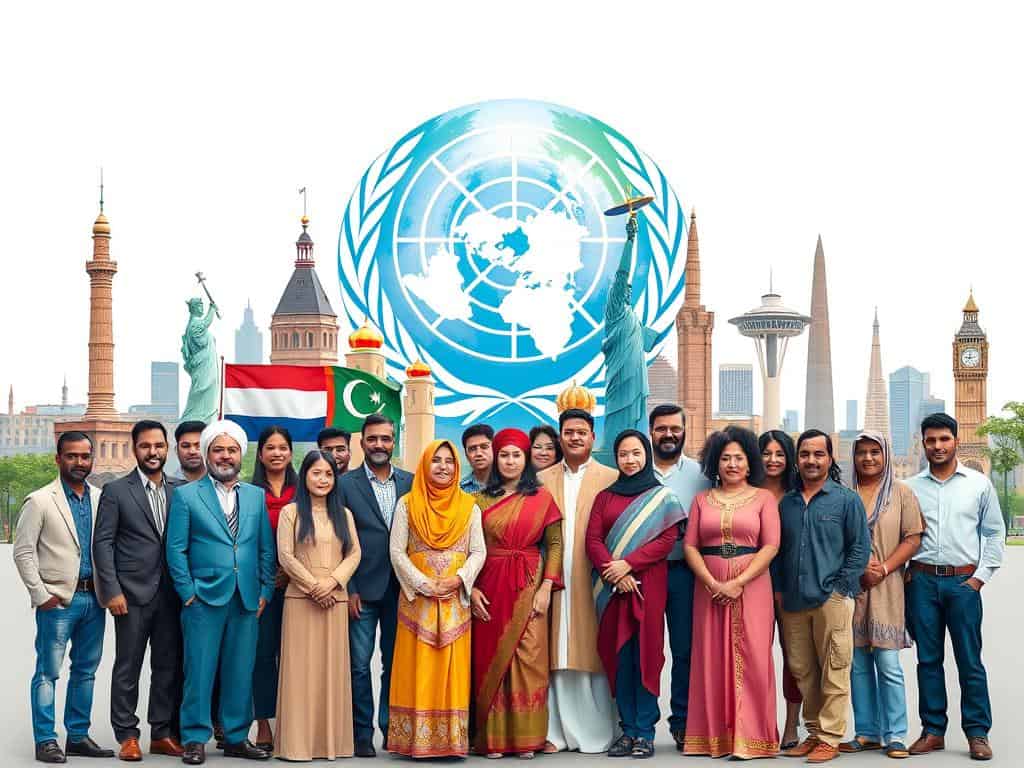
The Evolution of Human Rights Activism
To understand human rights activism, we must look at grassroots movements and global efforts. These actions have been key in pushing for human rights around the world. Community advocacy starts from the bottom, supporting many campaigns for justice and fairness.
Grassroots Movements and Global Activism
Grassroots movements show the power of local action tackling big issues. People and groups focused on human rights work to change unjust systems. For example, ending slavery in many countries was led by local activists who pushed for change.
These efforts often spark global movements. They encourage others to use similar strategies in their areas.
The Role of Non-Governmental Organizations
NGOs are critical in human rights activism, providing support and amplifying voices. Groups like Amnesty International and Human Rights Watch expose abuses and push for standards. They help change policies and raise awareness, making a big difference in how we talk about human rights.
Working with grassroots movements, NGOs help build a more aware and active global community. Together, they fight for human rights.
Conclusion
The journey of human rights is far from over. We’ve seen big steps forward through key documents and activism. But, the fight for equality is not easy.
Frameworks like the United Nations help a lot. But, in places like Africa, success depends on leaders and global support.
Having a human rights commission is just the start. It’s how well they work that really matters. They need to help everyone and work with other important groups.
This shows us that protecting rights is a big job. It’s not just up to commissions. Everyone, including courts and lawmakers, has a role to play.
This journey of human rights shows us how important equality is. We all have a part to play in making things better. It’s our duty to keep working for a fair world.


Explore the Secrets of the World’s Oldest Cities

10 Inventions That Are Changing Lives Right Now

The Tech Making Space Exploration Possible
About The Author
