What Prehistoric Creatures Can Teach Us About Today
Did you know that about 99% of all species that have ever existed on Earth are now gone? This fact shows how fragile life is and what we can learn from ancient creatures. By studying fossils, we gain insights into how life evolved and survived in the past.
From dinosaurs to ancient sea creatures, each find helps us understand their world and our own. These discoveries teach us about the importance of protecting our planet. They remind us of the need to preserve biodiversity for the future.
Key Takeaways
- 99% of species that have lived on Earth are extinct, illustrating the fragility of life.
- Fossils provide critical insights into prehistory and its impact on today’s ecosystems.
- Lessons from ancient life can guide modern conservation efforts.
- Understanding evolution helps tackle today’s environmental issues.
- Ancient species like dinosaurs show the value of adaptability in survival.
Understanding Prehistoric Life Through Fossils
Fossils give us a peek into the lives of ancient creatures. They show how life has changed over time. These preserved remains tell us about the world long ago.
The Importance of Fossils in Studying Ancient Creatures
Fossils are key to understanding life long ago. They go back about 3.5 billion years. From ancient Greeks to scientists like Nicholas Steno, our knowledge has grown.
These fossils tell us about life’s timeline and how creatures lived together. For example, they show how ancient moths ate leaves. They also help us learn about how dinosaurs grew.
Lessons from Marine Fossils
Marine fossils tell us about life in the past. They show how some creatures have stayed the same for millions of years. The coelacanth is a great example.
These fossils also show how creatures adapted to their environments. The pygmy right whale and the frilled shark are examples. They show how life has faced challenges over time.
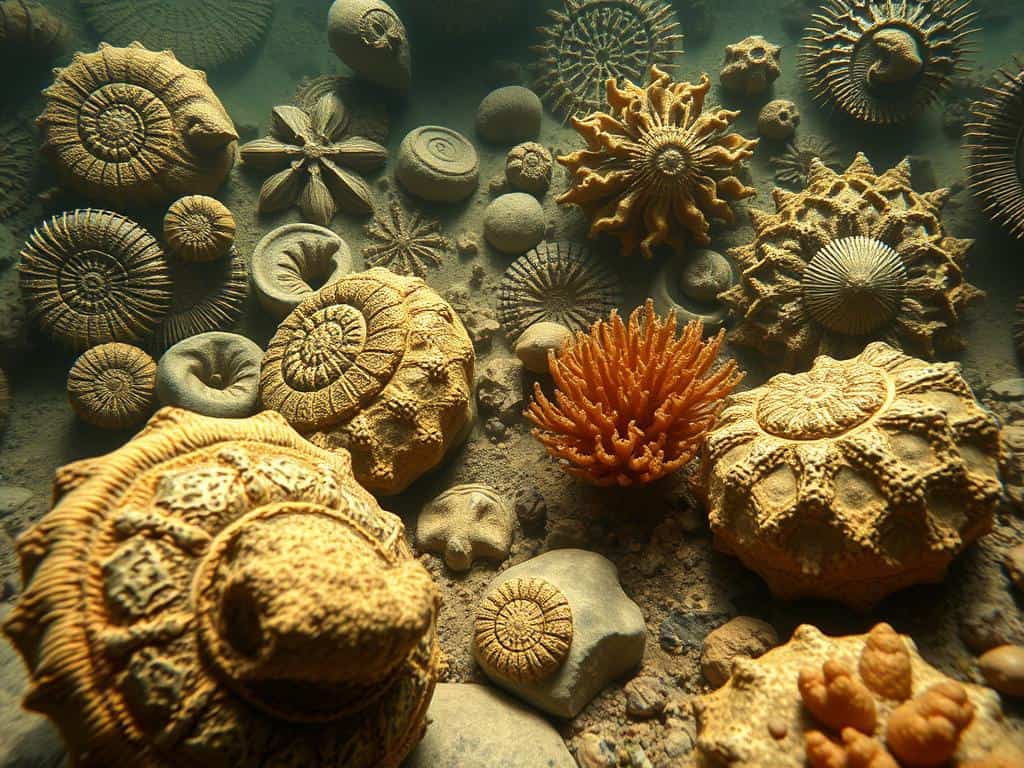
Evolution and its Relevance to Modern Society
The history of life on Earth teaches us about survival and adaptation. Dinosaurs lived for over 150 million years, showing us how evolution works. They adapted to their environments, teaching us about life’s ability to endure.
Dinosaurs and Their Legacy
Dinosaurs have fascinated many with their diverse forms. Their fossils connect us to Earth’s past and show how life adapted to changes. Dinosaurs and birds share a unique evolutionary link, showing traits can last for millions of years.
This history teaches us that survival often depends on adapting to our surroundings.
Adaptive Traits Found in Prehistoric Creatures
Adaptive traits are key to understanding prehistoric survival. The coelacanth, a “living fossil,” has unique traits that have helped it survive for ages. The horseshoe crab’s ability to survive five mass extinctions shows the power of adaptation.
These ancient creatures teach us about the importance of being flexible and innovative. As we face modern challenges, their lessons remind us of the need for adaptability in all life forms.
Conclusion
Looking into prehistoric life, we see how evolution has shaped our world. Fossils give us a glimpse into how ancient creatures adapted to their environments. These lessons are important as we face today’s challenges like climate change and habitat loss.
Learning from ancient species, like dinosaurs and early sea creatures, helps us tackle modern ecological problems. By studying the past, we understand the need for sustainability and protecting our ecosystems. The survival strategies of ancient times are just as relevant today.
Exploring evolution and ancient life does more than just teach us. It inspires us to act for a healthier planet. By studying our ancestors’ impact, we see the importance of learning from the past. This knowledge guides us towards a more sustainable future.


Secrets of the Most Advanced Ancient Civilizations

Top 10 Facts About the Universe That Will Amaze You

The Inventors Who Changed the World Forever
About The Author
