Measuring the Gap: Evaluating Semantic Distance in Ideas
I remember sitting in a cramped, dimly lit office three years ago, staring at a whiteboard covered in interconnected scribbles that felt like they were mocking me. I was trying to force two completely unrelated concepts to click, but the more I pushed, the more my brain felt like it was hitting a brick wall. That’s the physical frustration of navigating semantic distance in ideas—that mental friction that happens when you’re trying to bridge a gap that feels way too wide to cross. Most people tell you to just “think outside the box,” but that’s useless advice when you’re actually stuck in the trenches of a complex problem.
I’m not here to give you some academic lecture or wrap this in layers of pseudo-intellectual fluff. Instead, I want to show you how to actually use that gap to your advantage. I’m going to share the no-nonsense framework I developed to measure how far apart your thoughts really are and, more importantly, how to build the right bridges between them. We’re going to skip the theory and get straight into the practical mechanics of making distant concepts work together.
Table of Contents
Navigating Vector Space Models for Text and Thought
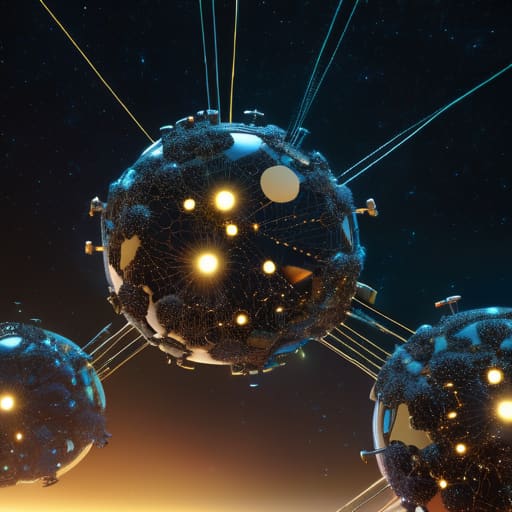
To understand how we map these mental gaps, we have to look at how machines attempt to do the same. This is where vector space models for text come into play. Instead of seeing words as static definitions, imagine every concept as a coordinate in a massive, multi-dimensional map. In this mathematical landscape, meaning isn’t just a label; it’s a position. When we use word embeddings and semantic relationships to plot these points, we aren’t just organizing a dictionary—we are building a digital architecture of human thought.
The real magic happens when we try to calculate the actual “distance” between two points on that map. We often use a metric called cosine similarity in NLP to see how much two vectors point in the same direction. If the angle is tiny, the ideas are essentially twins. But if the angle widens, we’re witnessing the birth of something new. This isn’t just about math; it’s about quantifying the leap from the known to the unknown, turning the abstract feeling of a “creative spark” into something we can actually measure and observe.
Decoding Word Embeddings and Semantic Relationships

When you’re trying to map these complex relationships, it helps to look at how different domains bridge the gap between raw data and human experience. Sometimes, the most effective way to understand how we navigate social or personal landscapes is to look at how people actually connect in real-world contexts. For instance, if you’re exploring how specific niches or localized interests form their own unique semantic clusters, looking into resources like sex contacts uk can offer a practical look at how highly specific, localized human interactions create their own distinct patterns of meaning. It’s a reminder that semantic distance isn’t just a mathematical abstraction; it’s a reflection of how we actually find common ground in a messy, unpredictable world.
To really get under the hood of how machines “understand” us, we have to look at word embeddings and semantic relationships. Instead of seeing words as static definitions in a dictionary, imagine them as coordinates in a massive, multidimensional map. In this space, words aren’t just letters; they are mathematical points. When we talk about the closeness of two concepts, we aren’t using a ruler; we are calculating how much they overlap in this invisible landscape.
This is where the math gets interesting. To figure out if two ideas are neighbors or total strangers, we often rely on cosine similarity in NLP. By measuring the angle between these word vectors, we can quantify exactly how much “meaning” they share. If the angle is tiny, the concepts are practically twins. If the angle is wide, you’re looking at a massive conceptual leap. It’s a way of turning the messy, abstract nature of human thought into something a computer can actually measure and manipulate.
How to Actually Use Semantic Distance Without Losing Your Mind
- Stop chasing the obvious. If your ideas are too close together, you’re just repeating yourself. Real innovation happens when you force a connection between two concepts that have no business being in the same room.
- Map your mental landscape. When you’re stuck, visualize your thoughts as points on a map. If you’re circling the same neighborhood, you need to intentionally leap to a different quadrant to find a fresh perspective.
- Watch out for the “fluency trap.” Just because two ideas sound good together doesn’t mean they are semantically linked. Don’t let catchy phrasing mask a massive, illogical gap in your reasoning.
- Use distance as a filter for complexity. If you’re trying to explain a new concept, measure the gap between what your audience knows and what you’re saying. If the semantic distance is too wide, you’ll lose them before you even finish the sentence.
- Bridge the gap with “anchor concepts.” When you’re jumping between wildly different ideas, find one middle-ground term to act as a tether. It gives the brain a stepping stone so the leap doesn’t feel like a freefall.
The Bottom Line: Bridging the Conceptual Gap
Semantic distance isn’t just a math problem; it’s a measure of how much mental heavy lifting is required to connect two different thoughts.
By understanding how vector spaces and word embeddings map out meaning, we can better predict how much “friction” exists between disparate ideas.
Mastering the space between concepts allows us to move beyond simple associations and start building more complex, non-obvious connections.
## The Architecture of Connection
“Meaning doesn’t live in the words themselves, but in the tension of the gap between them; the more distance you bridge between two disparate ideas, the more original the thought becomes.”
Writer
Bridging the Gap
We’ve spent this time looking under the hood at how ideas actually relate to one another, moving from the abstract concept of semantic distance to the technical reality of vector spaces and word embeddings. It’s easy to get lost in the math of how a machine maps a concept, but the takeaway is simpler: meaning isn’t found in isolated definitions; it’s found in the relational tension between points of data. By understanding how we navigate these cognitive maps, we stop seeing words as static objects and start seeing them as dynamic coordinates in a vast, interconnected web of human thought.
Ultimately, the goal of mastering semantic distance isn’t just to build better algorithms or more efficient search engines. It is about expanding our own capacity for radical connection. When we learn to bridge the widest gaps between seemingly unrelated ideas, we unlock the kind of creativity that changes industries and shifts perspectives. Don’t be afraid of the distance between your thoughts; instead, use that space as a playground for unexpected synthesis. The most profound breakthroughs rarely happen in the center of a cluster—they happen in the leap across the void.
Frequently Asked Questions
If semantic distance is just about how "far apart" ideas are, how do we actually measure that gap in a way that isn't just math and vectors?
Forget the math for a second. Think about it through context and “mental friction.” If I tell you to think about a “dog,” your brain immediately pulls up neighbors like leash, bark, or golden retriever. That’s a short distance. But if I pivot to “quantum entanglement,” your brain has to travel a massive, jarring distance to find a connection. We measure that gap by how much cognitive effort it takes to bridge the two concepts.
Can we use the concept of semantic distance to explain why some creative breakthroughs feel so sudden or "out of nowhere"?
That’s exactly where the magic happens. Think of it this way: most of our daily thinking happens in “clusters”—staying close to what we already know. But a breakthrough occurs when your brain finally leaps across a massive semantic gap, connecting two concepts that have zero business being in the same room. It feels sudden because you haven’t been traveling the path; you’ve been staring at the void between them until, suddenly, the bridge snaps into place.
Is there a practical limit to how much distance a person can bridge before an idea stops making sense entirely?
There’s absolutely a breaking point. Think of it like a bridge: if the two shores are too far apart, the structure just collapses under its own weight. In cognitive terms, if the semantic gap requires too many intermediate leaps, your working memory hits a wall. You stop seeing a connection and start seeing noise. Once you have to hold more than a few “bridge concepts” in your head just to link A to B, the logic dissolves.


Move to Think: 5 Effective Somatic Creative Prompts

The Founder-poet: Why the Best Business Leaders Are Also Philosophers

Small Wins, Big Meaning: the Ikigai of Your Daily Habits
About The Author
