The World’s Most Dangerous Volcanoes and How They Work
Did you know there are about 1,350 potentially active volcanoes worldwide? Around 500 of them have erupted in recorded history. This shows how much geological activity is happening beneath us. It also highlights the dangers these natural wonders pose.
Volcanic eruptions are key to understanding these dangers. They are important for the safety of people living near them. They also play a big role in shaping our environment over time.
Throughout history, eruptions have made amazing landscapes. They have also changed local ecosystems. Let’s explore how dangerous volcanoes work, what causes their eruptions, and how to stay safe near them. From explosive eruptions to creating fertile soils, volcanoes are complex and fascinating.
Key Takeaways
- Approximately 1,350 potentially active volcanoes exist globally.
- About 500 volcanoes have erupted during recorded history.
- Explosive eruptions can create ash clouds and induce mudflows.
- Pyroclastic flows move rapidly and can reach critical temperatures.
- Volcanic eruptions contribute to the formation of fertile soils.
- Understanding the geological activity of volcanoes is vital for safety.
Understanding Volcanic Eruptions
Volcanic eruptions are fascinating and complex. They change the Earth’s landscape and affect its ecosystems. This section looks at the different types of eruptions, what causes them, and how they impact local areas.
Types of Eruptions
There are six main types of eruptions. Each has its own characteristics and effects on the environment. For example, Hawaiian eruptions are known for their gentle lava flows. On the other hand, eruptions like Mount St. Helens in 1980 are explosive and can send ash high into the air.
Geological Causes Behind Eruptions
Eruptions are caused by tectonic plate movements and magma composition. These movements can create volcanic systems. For instance, the Lassen volcanic center in California erupted in 1917 due to these movements. Knowing the causes helps predict eruptions and prepare for disasters.
Impact of Eruptions on Local Ecosystems
Eruptions can have a big impact on local ecosystems. They can destroy habitats and change the land. They also release ash and gases that can affect the climate.
These effects can lead to health problems, economic issues, and even mass migrations. This can disrupt the stability of communities in affected areas.
Volcanoes Explained
Volcanic activity has greatly impacted human history and ecosystems. Major eruptions have changed landscapes and harmed populations. It’s important to look at significant eruptions to understand today’s volcanic hazards.
Historical Impact of Major Eruptions
The eruption of Mount Vesuvius in 79 A.D. changed history. It buried Pompeii and Herculaneum, showing life back then. In 1980, Mount St. Helens in the U.S. caused loss of life and economic damage.
These events show how volcanoes can destroy communities. They change lives and landscapes forever.
Key Features of Dangerous Volcanoes
Dangerous volcanoes have common traits that raise their risk. Features like steep slopes and explosive power create fast-moving flows. Being close to people makes eruptions even more dangerous.
Other dangers like lahars and ash complicate rescue efforts. Knowing these features helps us prepare for volcanic hazards.
Profiles of the World’s Most Dangerous Volcanoes
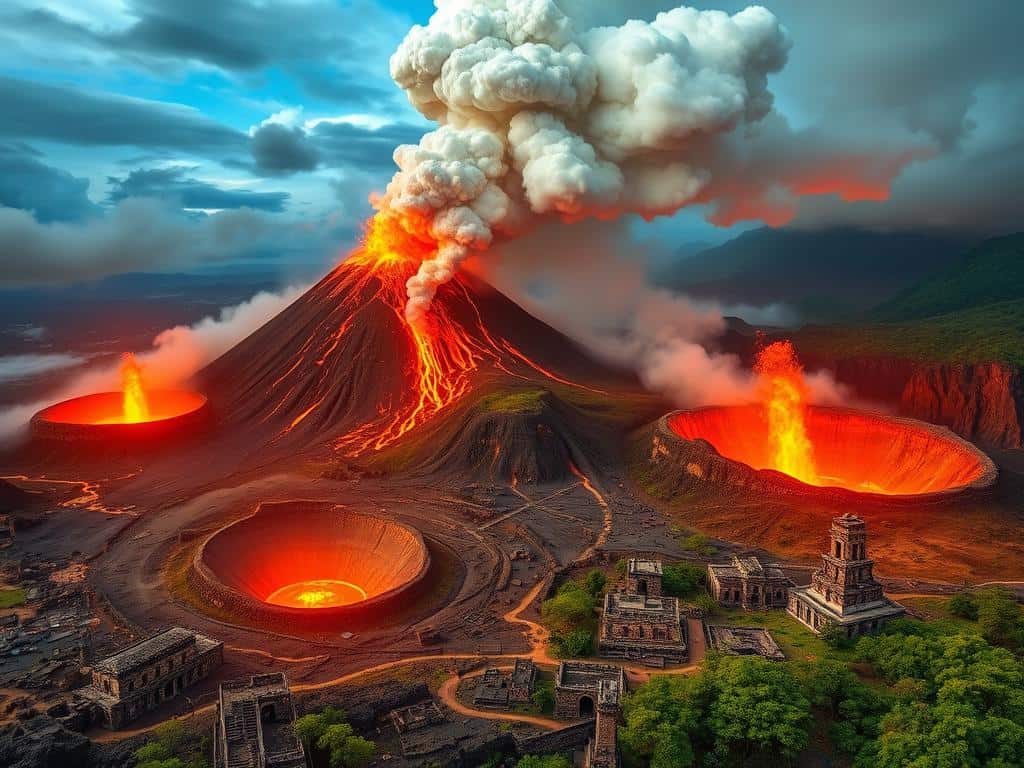
Looking into the profiles of dangerous volcanoes shows their past impact and today’s risks. It’s key to know about these *active volcanoes* to understand the dangers they bring, mainly to areas with lots of people. Here, I explore the profiles of some of the world’s most dangerous volcanoes.
Cotopaxi, Ecuador
Cotopaxi is one of the tallest active volcanoes, causing worry with its eruptions. It’s just 30 kilometers from Quito, Ecuador’s capital. This close proximity to a big city makes it a major concern for volcanic dangers. Standing at 5,897 meters, Cotopaxi is not just tall but also has the power to erupt, making it very dangerous.
Mount Vesuvius, Italy
Mount Vesuvius is famous for its eruption in 79 A.D. that destroyed Pompeii. Today, it’s a big threat with millions living nearby. If it erupts again, everything within four miles could be destroyed. The history of Vesuvius shows why we must keep watching it closely.
Popocatépetl, Mexico
Popocatépetl is near Mexico City and is very active. Its eruptions affect the nearby cities. It has been more active in the mid-1990s, making it a constant danger. The risks of ash clouds and pyroclastic flows make it even more dangerous.
Mount St. Helens, USA
Mount St. Helens is a clear example of a volcano’s power in the U.S. Its 1980 eruption changed the landscape and taught us about volcanic dangers. It’s watched closely, showing the importance of being ready for eruptions. The lessons from St. Helens help us prepare for future eruptions.
Conclusion
Understanding volcanoes is key to knowing how they affect us and the environment. This article has covered different types of eruptions and why they happen. It shows how volcanoes change our world and the life around them.
Big eruptions can change the air we breathe, leading to harsh winters that cause famines. This highlights the need for scientists to watch volcanoes closely. They help us guess when eruptions might happen and how to stay safe.
Being ready for eruptions is very important. Knowing about dangerous volcanoes and their eruptions can save lives. It also helps protect our ecosystems. Teaching people about volcanic safety is also critical, even in crowded places.
Looking back, our knowledge of volcanoes is growing. New tools and ways to analyze data are giving us fresh insights. This means we can predict eruptions better and respond faster when they happen. Staying alert and prepared is essential as we face the challenges volcanoes bring.


The Most Unbelievable World Records Ever Set

10 Fascinating Events That Shaped World History

What Lies in the Deepest Parts of the Ocean?
About The Author
