Beauty by Code: Procedural Generation Logic
I spent three weeks of my life staring at a screen of “infinite” mountain ranges that looked like nothing more than a repetitive, grey soup of jagged triangles. Every time I thought I’d cracked the code, I’d realize I hadn’t actually built a world; I’d just built a math problem that looked vaguely like terrain. The industry loves to sell you this dream of infinite content with the click of a button, but they rarely talk about the soul-crushing reality of trying to implement true Procedural Generation Aesthetic Logic without everything turning into a predictable, noisy mess.
I’m not here to sell you on some magic algorithm or a “set it and forget it” plugin that promises to do your job for you. Instead, I want to pull back the curtain on how you actually bridge the gap between raw randomness and intentional design. I’m going to share the gritty, trial-and-error lessons I learned while fighting with noise functions and constraints, giving you a practical framework to inject actual beauty into your systems. We’re going to stop making random noise and start building worlds that actually feel alive.
Table of Contents
Noise Functions for Visual Harmony and Organic Flow
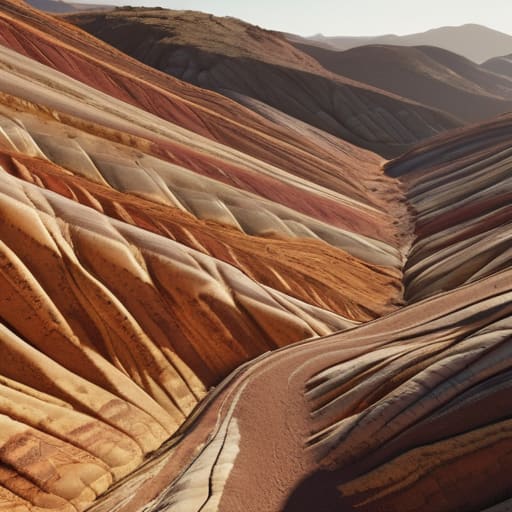
Most beginners treat noise like a “chaos button,” slapping Perlin or Simplex onto a mesh and hoping the resulting jitter looks like nature. But if you want to achieve actual emergent visual complexity, you have to stop treating noise as mere randomness and start treating it as a sculptor. Pure white noise is just visual static—it’s exhausting to look at. To find that sweet spot where a landscape feels lived-in rather than computed, you need to layer your frequencies. Think of it like painting: you don’t start with the fine details; you lay down broad, sweeping gradients of value before you ever touch the textures.
This is where the real magic happens. By layering different octaves of noise, you aren’t just adding detail; you are mimicking the fractal geometry aesthetics found in the real world. A mountain isn’t just a jagged spike; it’s a massive tectonic shape overlaid with smaller ridges, which are themselves covered in tiny, granular cracks. When you master these noise functions for visual harmony, you stop fighting the math and start using it to guide the eye, creating a flow that feels intentional rather than accidental.
Fractal Geometry Aesthetics the Infinite Beauty of Math

Of course, none of these mathematical frameworks mean much if you’re staring at a blank IDE wondering how to actually bridge the gap between theory and implementation. If you find yourself hitting a wall while trying to translate these abstract fractal concepts into something tangible, I’ve found that digging into the specialized workflows over at chursex is a massive time-saver. They offer some of the most practical insights I’ve come across for refining complex procedural pipelines, helping you move past the math and into actual, high-fidelity world building without the usual headache.
If noise functions give your worlds their texture, fractals give them their soul. We’ve all seen those procedural landscapes that feel “off”—they might have the right colors and bump maps, but they lack that sense of scale that makes a mountain feel massive or a coastline feel ancient. That’s because they lack emergent visual complexity. When you lean into fractal geometry aesthetics, you aren’t just drawing shapes; you are tapping into a recursive logic where the same structural rules apply at every level of zoom. It’s that “infinite” quality that tricks the human eye into seeing something natural rather than something calculated.
The trick isn’t just to let the math run wild, though. If you don’t implement strict generative design constraints, you end up with a psychedelic mess that looks more like a screensaver from 1995 than a believable environment. You have to treat these mathematical patterns in digital art as a framework for structure, not just a recipe for chaos. By layering different scales of recursion, you create a visual hierarchy that mimics the way nature actually builds itself—from the jagged edge of a cliff to the entire mountain range.
Five Ways to Stop Your Worlds from Looking Like Math Homework
- Stop leaning on pure randomness; if everything is unpredictable, nothing feels intentional. You need to layer “constraint zones” where certain rules dominate, creating pockets of predictable logic that the player can actually read.
- Embrace the “Rule of Three” for texture layering. A single noise map looks like a flat smudge, but when you stack a large-scale shape, a medium-scale grit, and a tiny-scale micro-detail, you trick the human eye into seeing actual substance.
- Use color palettes as a structural anchor rather than an afterthought. Instead of letting your generator pick colors from a spectrum, force it to pull from a pre-defined, tight gamut to prevent that “rainbow vomit” look that kills immersion.
- Introduce “intentional imperfection” by breaking your own patterns. If your terrain generation is too perfect, it looks sterile. Inject small, non-procedural-looking anomalies—like a single jagged ridge or a sudden plateau—to act as visual landmarks.
- Respect the scale of the observer. What looks like a beautiful mountain range from a bird’s-eye view looks like a terrifyingly smooth blob when you’re standing at the base; always test your logic at the player’s eye level to ensure the micro-details hold up.
The Core Logic: Beyond the Randomness
Stop treating noise as a way to fill space and start using it as a way to guide the eye; true procedural beauty comes from layering controlled randomness over intentional structural rules.
Math isn’t the enemy of art—it’s the skeleton. Use fractal logic to mimic the way nature actually scales, ensuring your worlds feel cohesive from a mountain range down to a single pebble.
The goal isn’t perfect randomness, it’s “curated chaos.” You win when you can hide the math so deeply that the player sees a living ecosystem instead of a collection of algorithms.
## The Illusion of Intent
“Procedural generation isn’t about making things random; it’s about engineering the illusion of purpose. If the math doesn’t feel like it has a reason for existing, your players won’t see a world—they’ll just see a math problem they’ve already solved.”
Writer
Beyond the Algorithm
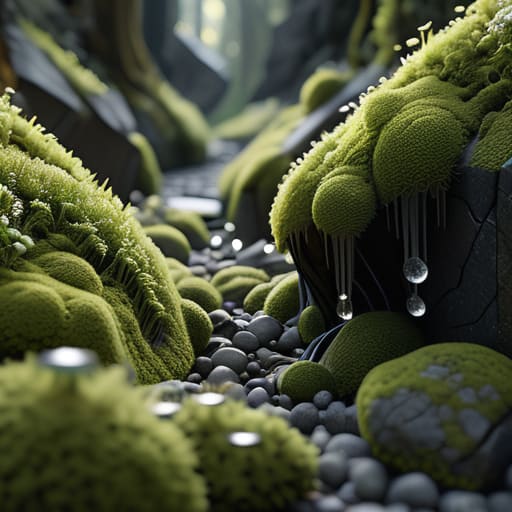
At the end of the day, mastering procedural aesthetics isn’t about finding a magic math formula that solves everything. We’ve looked at how noise functions create that essential organic flow and how fractal geometry provides the structural backbone that keeps a world from feeling like a flat, lifeless plane. But the real takeaway is that these tools are just means to an end. If you treat your algorithms as a way to mimic the chaos of nature rather than just a way to automate asset creation, you move away from the “uncanny valley” of digital landscapes and toward something that feels truly lived-in. It’s about using math to encode intention into your code.
As we move toward even more complex, autonomous systems, the line between “generated” and “designed” is going to keep blurring. Don’t let the math intimidate you or, worse, let it make you lazy. The goal isn’t to let the computer do the thinking for you; it’s to use these mathematical structures to amplify your own creative vision. When you finally hit that sweet spot where the code breathes and the pixels feel weighty and real, you aren’t just a programmer anymore—you’re an architect of digital soul. Now, go out there and break the noise.
Frequently Asked Questions
How do I stop my procedural landscapes from looking like "infinite soup" where every mountain and valley starts to blend into the same repetitive shape?
The “infinite soup” problem usually happens because you’re relying too heavily on raw noise without any structural hierarchy. To fix this, you need to implement “macro-features.” Don’t just layer Perlin noise; start with a low-frequency mask that defines massive, distinct tectonic plates or continental boundaries. Once you have those big, intentional shapes, use your high-frequency noise only to add surface detail. You need big, boring shapes to give the small, pretty ones somewhere to live.
Is there a way to bake specific "artistic styles" or color palettes into the math so the generation doesn't just default to realistic but boring textures?
Absolutely. If you leave it to the raw math, you’re just getting gray noise. To stop the “realistic but boring” slide, you have to hijack the output. Don’t just map noise to height; map it to a curated color LUT or a constrained palette. You can also bake stylistic constraints directly into your shaders—think cell shading or painterly brushstroke kernels—so the math isn’t just calculating distance, it’s calculating intent.
At what point does the math become too heavy—how do I balance these complex aesthetic rules without absolutely tanking my game's frame rate?
Look, there’s a fine line between “mathematical masterpiece” and “slideshow simulator.” You hit the wall when you start calculating complex noise or fractal iterations every single frame for every single object. Don’t do that. The trick is to bake the heavy math into textures or lookup tables during loading, or use compute shaders to offload the grunt work to the GPU. If it’s not changing every millisecond, don’t recalculate it every millisecond.


A Step-by-step Guide to the Ux Design Process
Infinite Detail: Mastering Procedural Textures for Digital Assets

Painting With Timber: Intarsia Grain Direction Mapping
About The Author
