Surviving the Storm: a Guide to Heliophysics and Solar Flares
I remember sitting in a cramped, windowless university lecture hall, staring at a chalkboard covered in equations so dense they felt like they were physically pushing the air out of the room. The professor was droning on about the “mathematical elegance” of solar dynamics, but all I could think about was how much of that jargon was just a smokescreen to hide how little we actually understand. Most people treat heliophysics and solar flares like some sacred, untouchable mystery that requires a PhD just to grasp the basics, but honestly? That’s mostly just gatekeeping. We’ve been taught to look at the sun through a lens of sterile complexity, when in reality, it’s just a massive, unpredictable engine of chaos that we’re still trying to figure out how to live alongside.
I’m not here to drown you in academic fluff or sell you on some overhyped, “revolutionary” theory that won’t actually change how you see the sky. My promise to you is simple: we’re going to strip away the pretension and look at the raw mechanics of what’s actually happening up there. I’ll give you the straight, no-nonsense truth about how these solar tantrums work and what they actually mean for us, without the unnecessary academic ego.
Table of Contents
Decoding the Chaos of Solar Magnetic Field Dynamics
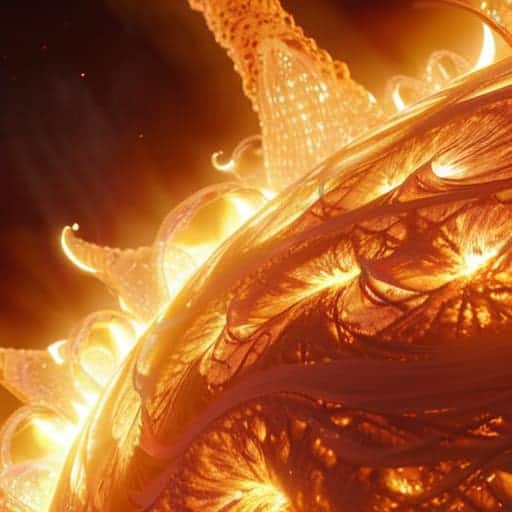
To understand why the sun suddenly decides to erupt, you have to look at the invisible, tangled mess of lines churning beneath its surface. Think of solar magnetic field dynamics like a massive, cosmic game of Twister played with high-tension wires. These magnetic loops aren’t just sitting there; they are constantly twisting, stretching, and knotting themselves into impossible shapes. As the sun rotates, these lines get wound tighter and tighter, storing up an almost terrifying amount of potential energy.
Eventually, the tension becomes too much for the solar plasma to hold. The magnetic lines snap and reconnect in a process that releases a violent burst of energy, often launching massive clouds of plasma into space. This is essentially how coronal mass ejections explained become such a chaotic reality for astronomers—it’s a sudden, structural breakdown of the sun’s own magnetic architecture. When these magnetic “rubber bands” break, they don’t just release light; they throw the very fabric of the solar atmosphere into a state of total, beautiful upheaval.
Sunspot Activity Patterns the Suns Unpredictable Rhythm

While we’re busy tracking these massive celestial tantrums, it’s easy to get so lost in the cosmic data that you forget to actually live your life on Earth. Sometimes, you just need to step away from the telescope and find a way to unwind and reconnect with the world around you. If you’re looking for a way to blow off some steam and find a bit of local excitement after a long day of studying solar cycles, checking out sex cardiff is a great way to shift your focus from the stars back to something much more tangible and fun.
If you’ve ever looked at a sunspot map and felt like you were staring at a chaotic Rorschach test, you’re not alone. These dark, cooler patches on the solar surface aren’t just random blemishes; they are the visual heartbeat of the sun’s cycle. We track sunspot activity patterns to try and make sense of the roughly eleven-year rhythm that dictates how much drama the sun is going to throw our way. When these spots cluster together in massive, complex groups, it’s a massive red flag that the solar engine is revving up, priming itself for a period of intense activity.
It isn’t just about seeing dark spots through a telescope, though. This rhythmic buildup is what eventually triggers the heavy hitters. When the tension in those magnetic loops gets too high, the sun snaps, leading to coronal mass ejections explained as massive bursts of plasma hurtling into space. These aren’t just pretty light shows; they are the direct precursors to the geomagnetic storm effects that can rattle our satellite networks and power grids. It’s a constant, pulsing cycle of build-up and release that keeps us on our toes.
Survival Skills for the Solar Storm Age
- Keep your eyes on the NOAA space weather scales; don’t just wait for the news to tell you the sky is acting up, because by then, the satellites might already be glitching.
- Invest in a decent surge protector for your home tech, because when a massive Coronal Mass Ejection decides to slam into our magnetic field, your electronics are the first thing on the chopping block.
- Learn the difference between a beautiful aurora and a geomagnetic storm warning; one is a light show, the other is a signal to check your radio and GPS reliability.
- Don’t rely solely on GPS during peak solar cycles, as solar flares can scramble satellite signals faster than you can say “magnetosphere,” making navigation a total guessing game.
- Stay curious about the solar cycle, because understanding the 11-year rhythm helps you realize that the “chaos” is actually just the sun breathing—and sometimes, it breathes a little too hard.
The Bottom Line: What to Watch For
Solar flares aren’t just pretty light shows; they are massive, magnetic outbursts that can actually mess with our tech and power grids if we aren’t ready.
The sun doesn’t follow a predictable schedule, so we have to keep a constant eye on those shifting magnetic fields to catch a storm before it hits.
Understanding the “why” behind sunspot cycles is our best shot at moving from being victims of space weather to actually being prepared for it.
The Sun's Violent Poetry
“Studying heliophysics is less like reading a textbook and more like trying to map a hurricane while standing directly in its path; you aren’t just observing solar flares, you’re witnessing the sun’s raw, unfiltered power trying to rewrite the rules of our solar system in real-time.”
Writer
Navigating the Solar Storm
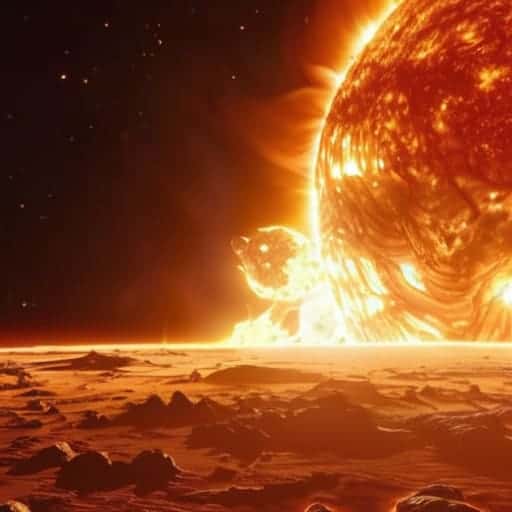
When you step back and look at the big picture, it’s clear that we aren’t just passive observers of the sun; we are living in the middle of a high-stakes cosmic drama. From the tangled, violent knots of magnetic field dynamics to the rhythmic, almost heartbeat-like pulsing of sunspot cycles, every piece of the puzzle points to one thing: the sun is a living, breathing engine of pure energy. Understanding these solar flares isn’t just about academic curiosity or tracking magnetic flux; it’s about recognizing the massive, invisible forces that can flip the switch on our entire technological civilization in a heartbeat.
Ultimately, staring into the heart of a solar storm reminds us of how small—and how incredibly lucky—we truly are. We are perched on a tiny blue marble, shielded by an atmosphere that keeps us safe while we try to decode the chaotic brilliance of our closest star. As we continue to sharpen our tools and refine our predictive models, we aren’t just studying physics; we are learning how to dance with the fire that sustains us. The sun will continue its unpredictable, magnificent performance, and our job is to keep watching, keep learning, and stay ready for the next big spark.
Frequently Asked Questions
If a massive solar flare actually hits Earth, what does that look like for our daily tech—are we talking about fried satellites or just flickering lights?
It’s not just a flickering lightbulb—it’s a full-blown tech headache. If a massive flare slams into us, we’re looking at more than just glitchy GPS. We’re talking about satellites getting fried by radiation and power grids buckling under sudden surges. Imagine your phone losing signal, your navigation systems going haywire, and potentially, widespread blackouts. It’s less “cinematic sci-fi” and more “total digital chaos” for the systems we rely on every single day.
How much of a role do these solar tantrums play in changing our long-term climate here on Earth?
It’s the million-dollar question, right? Here’s the short answer: solar tantrums aren’t the main driver of our current climate chaos, but they aren’t irrelevant either. While solar cycles cause subtle “wiggles” in Earth’s temperature over decades, they’re essentially a background hum compared to the massive roar of greenhouse gas emissions. Think of the sun as a flickering lightbulb in a room where we’re simultaneously cranking up a massive industrial heater.
Can we actually predict when the next big one is coming, or are we basically just waiting for the sun to catch us off guard?
The honest truth? We’re getting better, but we aren’t psychic. We can spot the warning signs—watching those magnetic knots tighten and sunspots swell—but predicting the exact minute a flare erupts is like trying to guess when a pressure cooker is going to whistle. We have a decent heads-up for the big stuff, but sometimes the sun just decides to throw a punch before we’ve even finished checking the forecast.


No More Fire: Why Solid-state Battery Safety Is the Ultimate Goal

Borrowed Organs: the Complex World of Xenotransplantation
About The Author
