Survival Tips Everyone Should Know for the Outdoors
On my last camping trip in the Rockies, I stood at a stunning view as the sun set. The air was fresh, and I was excited for the adventure. But as night came, it got cold, and I realized I wasn’t ready.
I learned how important it is to be prepared for survival. Survival experts say we can only last about three days without water. Harsh weather is also a big concern for outdoor lovers. We need to find shelter, water, and food quickly.
For anyone going into nature, knowing the environment, planning, and packing the right gear is key. Without the right knowledge, outdoor fun can become dangerous. Let’s look at the important strategies for surviving in nature and making our adventures safe and fun.
Key Takeaways
- Preparation is essential for any outdoor adventure.
- Understanding your environment and weather can greatly enhance survival chances.
- Water is critical; remember you can survive only about three days without it.
- Building a shelter can protect against hypothermia and extreme temperatures.
- Master navigation techniques to prevent emergencies caused by getting lost.
Essential Preparation and Planning for Outdoor Survival
Getting ready is key for a great outdoor survival trip. I focus on a few important steps to help me enjoy nature more. First, I learn about the weather and my surroundings.
Understand your environment and weather conditions
I always check the weather before heading out. Knowing the forecast helps me prepare for rain or cold. I also look at the terrain and watch out for dangers like wildlife.
Create a detailed itinerary
Having a detailed plan is a must. I map out my journey and set times for each stop. This keeps me on track and lets someone know where I am, which is safe.
Pack essential survival gear
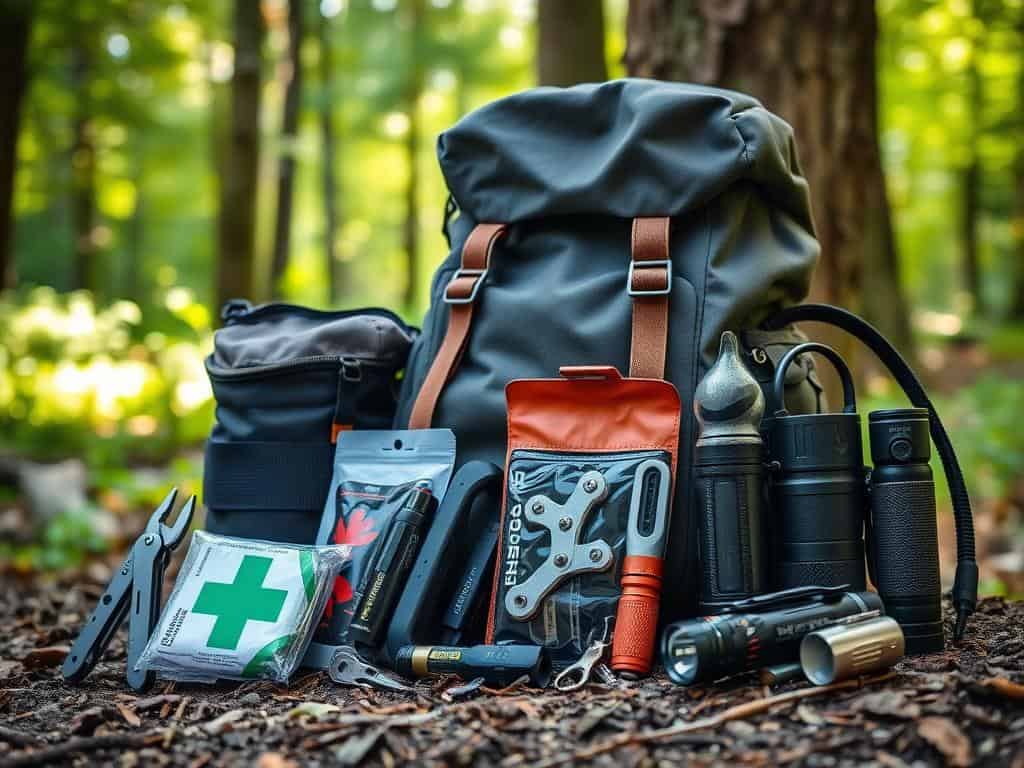
I pack the right gear for my trip. This includes maps, a compass, and clothes for the weather. A first aid kit, a strong backpack, and food and water are also key. Knowing how to use each item helps me face any challenge.
Master Navigational Skills: Your Outdoor Survival Guide
Navigational skills are key to any outdoor survival guide. They boost safety and confidence in the wilderness. Learning to use maps, compasses, and GPS makes navigation fun and easy.
Utilize maps, compasses, and GPS devices
Knowing how to use maps and compasses is vital. Topographic maps show terrain details like elevation and natural features. I look for blue lines for rivers and black squares for buildings to plan my route.
GPS devices are handy, showing my location in real-time. But, I don’t rely only on tech. Batteries can run out, and signals can be lost.
Learn orienteering techniques
Basic orienteering techniques improve my navigation. I use triangulation to find my spot with landmarks. This is key when GPS isn’t working.
I also use terrain association to match the landscape with my map. This builds confidence in new places.
Use natural landmarks for backup navigation
Using natural landmarks for backup navigation is also important. Mountains, rivers, and other features are reliable when tech fails. This skill helps me navigate, even with challenges.
For example, I use dead reckoning to guess my location when it’s hard to see.

Conclusion
Thinking about outdoor survival skills, I see that being ready is key. It’s not just a safety measure; it makes my time in nature better. Knowing my surroundings, being prepared, and planning well are vital for staying safe.
With over 3,000 wilderness incidents in the U.S. each year, these skills are very important. They help me face challenges head-on.
Having the right knowledge lets me find water, build a shelter, and start a fire. I can also forage for food and navigate well. This way, I’m ready for emergencies.
Being prepared doesn’t just reduce risks; it makes my adventures more enjoyable. It shows how important it is to learn and use these skills.
When I go into nature, I’m always ready. I practice safety, use my surroundings wisely, and know how to signal for help. This way, I can enjoy the outdoors fully and stay safe.


Stop Being a Generic Npc: the Sci-fi Guide on How to Write a Profile That Sounds Like You

Discover New Hobbies to Boost Your Creativity and Fun

Master Professional Email Etiquette in Just 5 Minutes
About The Author
