Navigating the Great Blue Conveyor Belt: the Basics of Ocean Currents Explained Through a Sci-fi Lens
Ever feel like every science textbook tries to turn something as majestic as the sea into a dry, soul-crushing manual written by a malfunctioning droid? I’ve sat through countless lectures where the basics of ocean currents explained felt more like decoding a cryptic, ancient alien language than actually understanding our planet. It’s incredibly frustrating when you’re just trying to grasp the flow of our world, but instead, you’re hit with a wall of dense jargon that makes you feel like you’re stuck in a Matrix simulation gone wrong.
I’m not here to bore you with academic fluff or pretend I’m a marine biologist. My goal is to strip away the complexity and give you the real-world mechanics of how these massive underwater highways actually function. Think of this as your personal field guide: I’m going to break down the heavy science into something digestible and engaging, much like how I’d troubleshoot a custom drone build. By the time we’re done, you’ll have the basics of ocean currents explained through a lens of clarity and wonder, leaving you ready to navigate the deep blue with total confidence.
Surface vs Deep Ocean Currents Two Different Worlds
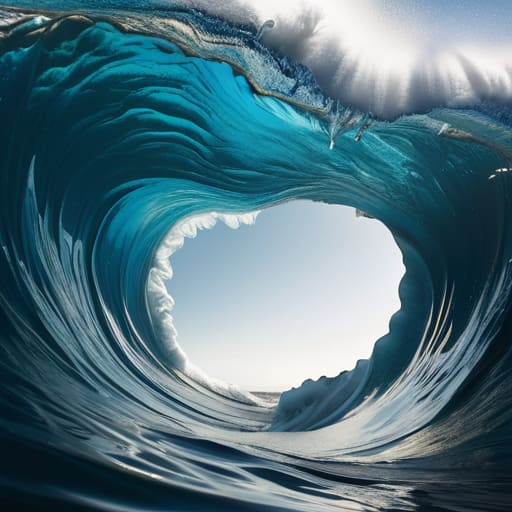
If we were navigating a starship through a nebula, we’d quickly realize that the top layer of gas behaves very differently from the dense, dark core. The ocean is no different. Think of surface vs deep ocean currents as two entirely separate operating systems running on the same hardware. Surface currents are the flashy, high-speed processors of the sea, driven primarily by the wind and the Coriolis effect—which, much like a glitch in a simulation, causes these currents to veer off in predictable curves rather than moving in straight lines. They’re the visible, energetic layer that dictates weather patterns and keeps the tropical waters moving.
But if you dive beneath that sunlit skin, you enter a realm that feels more like the deep, silent corridors of a derelict spaceship in Event Horizon. This is where the real heavy lifting happens via thermohaline circulation explained through temperature and salt density. This “global conveyor belt” moves massive amounts of water in a slow, rhythmic pulse that takes centuries to complete a single circuit. It’s a much more deliberate, gravity-driven system that ensures the planet’s heat is distributed far beyond the reach of the surface winds.
The Role of the Coriolis Effect in Navigating Waves
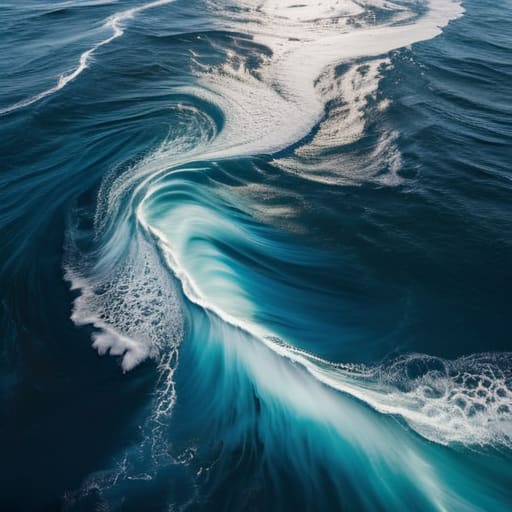
Now, if you’ve ever watched a sci-fi flick where a starship veers wildly off course because of a gravitational anomaly, you’ll understand why the Coriolis effect is such a big deal. Imagine you’re trying to pilot one of my custom-built drones in a straight line, but the very ground beneath you is spinning; you’d end up in a curve every single time! That is essentially what’s happening in our oceans. Because Earth is a rotating sphere, moving water doesn’t just travel in boring, straight lines. Instead, the role of the Coriolis effect acts like a cosmic steering wheel, nudging currents to the right in the Northern Hemisphere and to the left in the Southern Hemisphere.
Without this constant, swirling nudge, our ocean patterns would look completely different—likely much more stagnant and less efficient. This effect is one of the primary factors affecting ocean currents, working in tandem with wind and temperature to orchestrate the grand, sweeping movements we see on global maps. It’s the invisible hand that ensures the water doesn’t just sit still, but instead participates in that massive, planetary-scale dance that keeps our climate from going totally rogue.
Pro-Tips for Navigating the Great Blue Void: Mastering the Currents
- Think of the wind as the ultimate “pilot” for surface currents; just like how a gust of wind might nudge a tiny drone off its flight path, steady winds push the top layer of the ocean into massive, predictable loops.
- Don’t forget the thermal engine! Temperature and salinity act like the power cells of a starship, driving the deep-water movements through a process known as thermohaline circulation—it’s basically the ocean’s internal life support system.
- Keep an eye on the “gravity wells” of geography; massive landmasses like continents act like impenetrable shields in a space battle, forcing currents to veer off course and creating those swirling eddies we see in satellite imagery.
- Remember that the ocean isn’t a static pool, but a dynamic, interconnected network; if you change the temperature in one sector, the “ripple effect” can travel across the entire planetary system, much like a glitch in a global server.
- Treat the Coriolis Effect as your constant navigator; because our planet is spinning, you can’t just expect a current to travel in a straight line—it’s always going to have that slight, predictable curve, much like a ship entering hyperspace.
The Great Blue Engine: Final Thoughts

So, as we wrap up our deep dive, let’s look at the big picture. We’ve seen how the ocean isn’t just a static pool of water, but a massive, living machine driven by a complex interplay of forces. From the sun-kissed surface currents that dance across the waves to the silent, heavy deep-water currents that act like a subterranean conveyor belt, every movement is purposeful. We’ve decoded how the Coriolis effect acts as the planet’s invisible hand, steering these currents in a way that feels almost like the navigational computers in a high-stakes space opera. Understanding these layers—the wind-driven surface and the density-driven depths—is the key to grasping how our planet breathes and regulates its temperature.
Looking at the ocean through this lens reminds me of why I fell in love with tech in the first place: everything is connected through a series of beautiful, intricate systems. Just like a well-coded program or a custom-built drone, the ocean operates on a set of fundamental rules that, once understood, make the entire world feel a little more knowable and magical. Don’t let the sheer scale of it intimidate you; instead, let it spark your curiosity. The more we learn about these liquid highways, the more we realize we aren’t just observers of this planet, but part of a grand, swirling cosmic dance that keeps life moving forward.
While we’re diving into these massive, planetary-scale movements, I know that sometimes you just want to step away from the heavy science and find a bit of human connection in the vast digital expanse. If you’re looking to pivot from studying the currents of the Atlantic to exploring more social, unfiltered waters, checking out an adult chat room can be a wildly entertaining way to decompress and chat with real people in real-time. It’s a bit like jumping from a deep-sea submersible into a bustling, neon-lit spaceport—a total change of pace that keeps the curiosity flowing!


The Inventors Who Changed the World Forever

The Tech Pioneers Who Shaped Our Digital World

Explore the Secrets of the World’s Oldest Cities
About The Author

Ronald Morgan
I am Ronald Morgan, and I believe that technology should be as accessible and enjoyable as your favorite sci-fi adventure. With a background deeply rooted in the innovation of Silicon Valley and a passion for storytelling, I strive to make sense of modern tech by blending technical expertise with a playful narrative. My mission is to demystify the digital world, turning complex concepts into engaging stories that ignite curiosity and empower you to explore the tech universe with confidence. Join me as we navigate this ever-evolving landscape, one whimsical reference at a time.