Bake Like a Pro with These Simple Tips and Tricks
Baking brings back fond memories for me. I remember helping my grandmother in her cozy kitchen. She blended ingredients to make delicious desserts from scratch. It was magical, teaching me the joy of baking and its precision.
Baking is like a science experiment. Every measurement must be exact for the perfect rise or crust. As I started baking, I learned the importance of proper techniques. Accurate measurements and knowing how ingredients work are key.
Today, I want to share tips and techniques that have improved my baking. They can help you too.
Whether you’re baking a classic cake or trying new recipes, the right tools and knowledge matter. Let’s explore baking essentials that make the process easier and boost your confidence in the kitchen.
Key Takeaways
- Baking requires precise measurements for successful outcomes.
- Use a digital scale for accuracy when measuring ingredients.
- Invest in quality kitchen tools like clear measuring cups and light-colored pans.
- Understanding ingredient functions, like leavening agents, is key.
- Allow refrigerated ingredients to reach room temperature before mixing.
Essential Baking Techniques for Beginners
Learning the right baking techniques is key for beginners. Getting accurate measurements is a big part of making perfect baked goods. Using the right methods and tools makes baking easier and better.
Understanding the Importance of Accurate Measurements
Accurate measurements are the base for great cooking. Many bakers use digital scales for the most precise weights. This is key for consistent results in recipes.
Weight measurements are more reliable than volume for many recipes. This is why they’re preferred by many.
The Right Way to Measure Dry and Liquid Ingredients
Measuring dry and liquid ingredients right is important. For dry ingredients, the spoon and level method works best. It helps avoid packing down the ingredients.
For liquids, clear measuring cups are best. They help avoid mistakes in measurements. Small errors can change how your baked goods turn out.
Investing in Quality Kitchen Tools
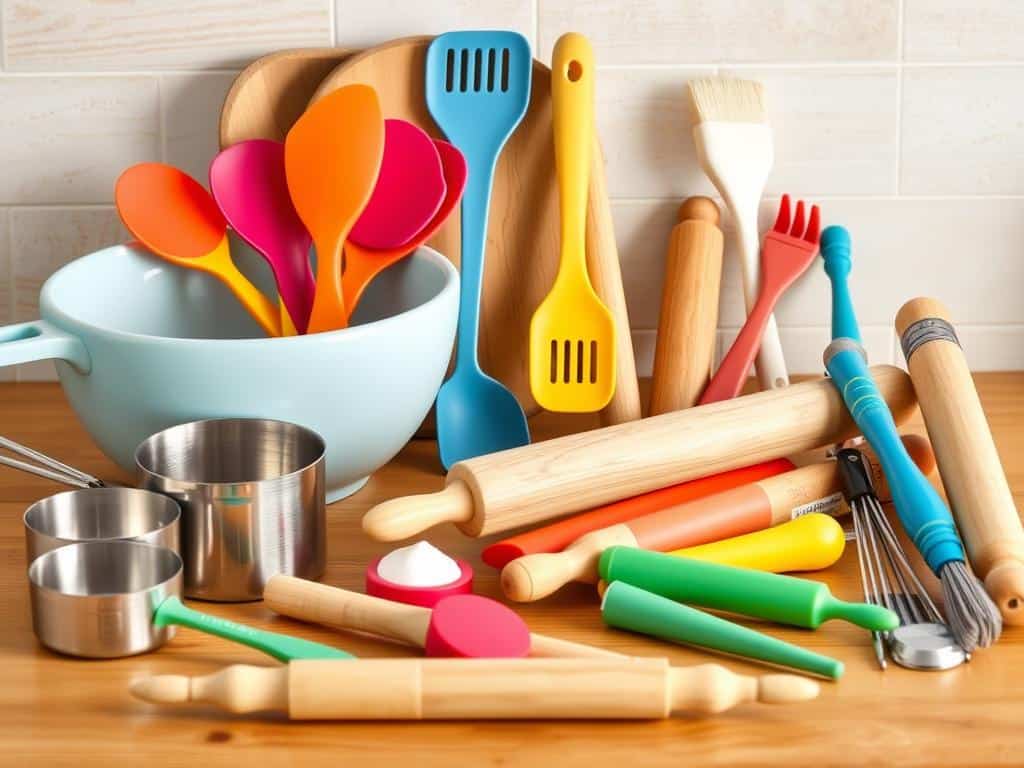
Good baking tools make a big difference. A top-notch mixer, like those from KitchenAid, helps get the right texture. Knowing how to use tools like whisks and mixing bowls is also important.
These tips help beginners build a strong foundation. They are key to success in baking.
Baking Guide: Mastering Ingredients and Their Functions
Knowing how different ingredients work in baking makes the process better and the results more delicious. This part talks about picking the right ingredients, the importance of using room temperature items, and how to use leavening agents. These are key parts of baking chemistry.
Selecting the Best Ingredients for Your Bakes
Choosing the right ingredients is key in baking. For example, using King Arthur Flour can make your baked goods better. Flour is the base, giving structure and stability.
Different flours, like bread flour and cake flour, have unique qualities. Bread flour makes things chewy, while cake flour makes them soft. Sugar adds sweetness and helps keep things moist and flavorful.
Room Temperature Ingredients: The Key to Even Mixing
Ingredients at room temperature are essential for a smooth batter. Cold butter or eggs can mess up the mix. I always make sure my butter and eggs are at room temperature before I start.
This helps when mixing fats with sugars. It makes the mix even, leading to lighter and fluffier results.
Proper Use of Leavening Agents
Leavening agents are key for making baked goods rise. Knowing the difference between baking powder, baking soda, and yeast is important. Baking powder and baking soda help things rise by releasing gas.
Yeast also makes things rise, but it changes the flavor and texture too. Getting good at using these ingredients is important for baking success.
Time and Temperature: Crucial Factors in Baking
Getting the timing and temperature right is key in baking. Knowing how to check and adjust your oven temperature is important. This ensures your baked goods look great every time. The right oven temperature helps create that golden-brown crust we all love.
Checking and Adjusting Your Oven Temperature
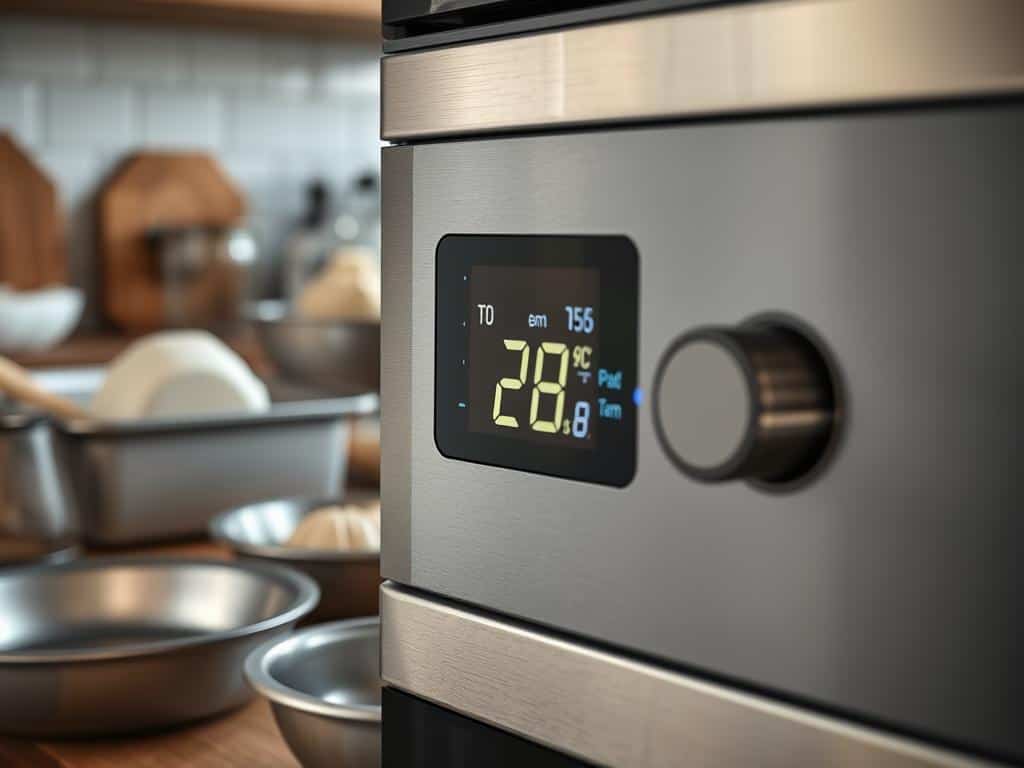
I suggest using an oven thermometer to check your oven’s temperature. Many appliances can be off. For items like biscuits or cupcakes, bake them at 325°F to 350°F. Cookies do better at 375°F to 400°F, getting that perfect crispness.
The Importance of Letting Dough Rest
Letting dough rest, like for cookies, greatly affects the final texture. It improves flavor and gives the right mix of chewiness and crispness. Taking time for dough resting ensures the best baking results, as ingredients blend well.
Choosing the Right Baking Pans
The type of baking pans you use is very important. Light-colored metal pans help with even cooking and prevent burning. Think about size too, as different shapes can change baking time and the final product. For example, a square pan can hold about 25% more than a round pan of the same size, so you might need to adjust baking time to avoid overflow.
Conclusion
As we wrap up our baking journey, it’s clear that anyone can succeed with dedication and knowledge. Understanding the importance of accurate measurements is key. Mastering tools and techniques also boosts my baking confidence.
The history of baking shows its evolution and importance in our kitchens. Using pro baking tips like choosing the right ingredients and understanding chemical reactions helps make delicious treats. The tools I use improve my skills, making sure my baked goods are always tasty.
Remember, baking is a skill that grows with practice and trying new things. As I keep exploring new recipes and techniques, I’m excited to improve my baking skills. Let’s enjoy the art of baking, savor the process, and make special moments in our kitchens.


Find Your Dream Job Faster with These Expert Tips

10 Daily Habits That Will Transform Your Life

Study Smarter, Not Harder with These Proven Strategies
About The Author
