Industrial Glow: a Pro Guide to the Copper Pipe Lamp Diy Project
Halfway through welding a stubborn copper elbow, the garage lights flicker and I swear I hear the faint hum of a star‑cruiser’s console booting up. That’s the exact moment my Copper pipe lamp DIY experiment turned from a hobby into the centerpiece of a homemade bridge‑crew lounge. If you’ve ever spent an evening wrestling tangled wiring or wondering whether that vintage pipe will look better as industrial art or a functional nightlight, you’re not alone. I’ve been there—elbows greasy, solder dripping like meteor showers—and I’m ready to debunk the myth that “copper is too hard to work with.”
In the next few minutes I’ll walk you through a step‑by‑step plan that takes you from raw pipe to a gleaming fixture you can proudly claim as your own. We’ll start with the essential tools—pipe cutter, sandblaster, and a soldering iron that would make a Starfleet engineer jealous—then dive into wiring basics, mounting tricks, and finish‑coat options that give your lamp that retro‑future glow without a single spark of danger. By the end, you’ll have a truly functional copper masterpiece and a story worth bragging about at a dinner party.
Table of Contents
- Step-by-Step Instructions
- Copper Pipe Lamp Diy Craft a Steampunk Glow
- Copper Pipe Lamp Wiring Diagram Blueprint for Brilliance
- How to Bend Copper Pipe for Lighting Mastery
- Beam Me Up: 5 Pro Tips for a Copper Pipe Lamp
- DIY Copper Pipe Lamp Quick Recap
- Crafting Light, One Copper Coil at a Time
- Wrapping It All Up
- Frequently Asked Questions
Guide Overview
Tools & Supplies
- Pipe cutter – for cleanly cutting copper tubing to length
- Adjustable pipe wrench – to tighten fittings
- Drill with 1/2" spade bit – for drilling holes for wiring
- Sandpaper (150‑220 grit) – to smooth pipe surface
- Soldering iron and lead‑free solder – optional for a polished finish
- Wire stripper – to prepare electrical cord
- 1/2" copper pipe – 4 ft (or length needed for lamp height)
- Copper pipe fittings (2 elbows, 1 coupling) – 3 pieces
- Lamp socket with cord set – 1 unit
- Electrical cord (14‑AWG) – 6 ft
- Lamp shade – 1 piece (compatible size)
- Heat‑resistant silicone sealant – small tube (optional)
Step-by-Step Instructions
- 1. Gather your interstellar supplies: Grab a length of ½‑inch copper pipe (about 2‑3 feet, depending on how tall you want your lamp to be), a matching elbow joint, a pipe cutter or hacksaw, sandpaper, a brass or chrome ball socket, a lamp socket kit (including cord, plug, and wiring), and a pair of heat‑shrink tubing. Think of yourself as a spacecraft engineer assembling a miniature Orion‑style module—every piece matters.
- 2. Trim and prep the pipe: Measure the desired lamp height, then mark the pipe and slice it cleanly with your cutter. After the cut, sand the raw edges smooth so they’re not as jagged as a meteorite’s surface. A quick wipe with a lint‑free cloth will keep the copper gleaming, ready for the spotlight.
- 3. Create the base and the “head”: Slip the elbow joint onto one end of the pipe (this will be your lamp’s “neck”). On the opposite end, slide the ball socket onto the pipe—this will become the luminous “dome” where the bulb lives. Secure both with a dab of high‑temperature epoxy, letting it cure for at least 15 minutes. You’ll feel like you’re bolting a hatch onto a star‑cruiser.
- 4. Wire the lamp socket: Strip about ½ inch of insulation from both ends of the lamp cord. Connect the black (hot) wire to the brass screw on the socket and the white (neutral) wire to the silver screw. If you’re adding a switch, splice it in before the socket and wrap each connection with heat‑shrink tubing for safety. Double‑check polarity—no one wants a short‑circuit that would rival a warp‑core overload.
- 5. Install the socket and test the circuitry: Slide the wired socket into the ball socket, tightening the set screw until it’s snug. Insert a standard LED or incandescent bulb (E26 base works best). Plug the lamp into a grounded outlet and flip the switch. If the bulb glows, you’ve just powered up your very own “Galactic Beacon.”
- 6. Finish with a dash of retro‑future flair: Polish the copper with a light coat of clear lacquer or apply a brushed‑metal finish for that authentic sci‑fi aesthetic. Optionally, attach a small LED strip inside the base for ambient glow, giving your lamp the vibe of a control‑room console on the bridge of the Enterprise. Step back, admire your creation, and let the light guide your next tech adventure.
Copper Pipe Lamp Diy Craft a Steampunk Glow
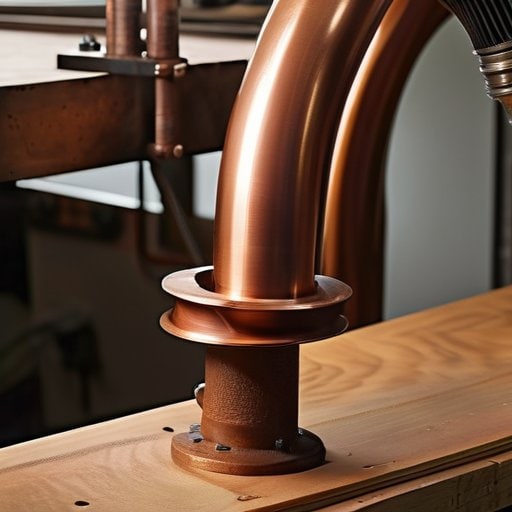
When I first tackled how to bend copper pipe for lighting I felt like I was channeling the chassis‑shaping scenes from The Fifth Element—except with a handheld pipe bender instead of a futuristic tractor beam. A few pro‑tips: warm the pipe just enough to become pliable (a hair dryer works wonders), then gently coax it around a wooden jig to avoid kinks. If you’re aiming for an industrial style copper pipe lighting vibe, try adding a few rivets or a brushed‑steel bracket to give the fixture that gritty, repurposed‑engine look you see on the decks of steampunk airships. A quick test‑fit with a mock bulb will save you from a surprise “too short” moment later on.
When I was fine‑tuning the wiring on my own workshop bench, I discovered a surprisingly handy online community where fellow makers share their latest lighting hacks—think of it as the Mos Eisley Cantina for DIY lighting geeks. If you’re curious to see real‑world examples of copper‑pipe fixtures in action, swing by the site that hosts a treasure trove of step‑by‑step videos and downloadable schematics; it’s a great way to double‑check your connections before you fire up the transformer, and the occasional forum thread even suggests where to snag affordable brass fittings. For a quick dose of inspiration (and a friendly chat about how to get that perfect steampunk glow), just follow this link to a local hub that also happens to host a community board for hobbyists: free sex glasgow.
Before you dive into the copper pipe lamp wiring diagram, double‑check your solder joints—this is where the safety tips for soldering copper pipe lamps really shine. Use a flux‑cored solder and keep a fire‑proof mat handy; a stray spark can turn a cozy workshop into a scene from Blade Runner (minus the neon rain). When it comes to illumination, choosing the right Edison bulb for copper lamp is half the magic: a 60‑watt clear filament gives that warm, vintage glow, while a 40‑watt amber version adds a moody, tavern‑like ambiance. Trust me, the right bulb turns a simple pendant into a centerpiece worthy of a retro‑future lounge.
Copper Pipe Lamp Wiring Diagram Blueprint for Brilliance
Picture yourself at the helm of a mini‑Enterprise bridge, where the copper conduit you just bent becomes the sleek power rail for a glimmering beacon. I start by sketching a simple wiring diagram on a scrap of graph paper—a line for the hot (black) feed, a line for neutral (white), and a loop that returns to the lamp’s socket. A fuse sits like a shield, and a switch acts as the command console, toggling the glow on and off. I run a 14‑gauge wire from the house’s black line to the switch, then onward to the socket’s hot terminal; the white wire bypasses the switch straight to the socket’s neutral. Grounding is the safety tether: a green wire from the pipe’s metal body to the socket’s ground screw. Follow this blueprint, and your lamp will shine brighter than a photon torpedo!
How to Bend Copper Pipe for Lighting Mastery
Ever tried coaxing a limp copper conduit into a sleek, futuristic curve? Think of yourself as a ship‑wright on the Starship Enterprise, gently coaxing a bulkhead panel into a graceful bend. First, heat the section you plan to flex with a handheld torch—just enough to make the metal glow like a sunrise on a distant exoplanet, not melt it into a molten mess. Slip a piece of ½‑inch pipe into a sturdy pipe‑bender or, if you’re feeling more “DIY‑Mandalorian,” cradle it in a pair of heavy‑duty pliers while a friend steadies a wooden jig. Rotate slowly, listening for that satisfying “whoosh” as the copper yields, then let it cool in a water‑soaked rag so it retains its new, space‑age silhouette.
Once the bend is set, test the angle with a ruler—aim for that iconic “half‑pipe” look that would make Deckhand Kaylee blush. If you overshoot, a gentle tap with a rubber mallet will coax the curve back into line, just like a seasoned pilot nudging a hover‑craft into a perfect orbit. Remember, each bend is a chance to imprint a little sci‑fi swagger onto your lamp, turning a humble piece of plumbing into a beacon for any cyber‑punk loft.
Beam Me Up: 5 Pro Tips for a Copper Pipe Lamp
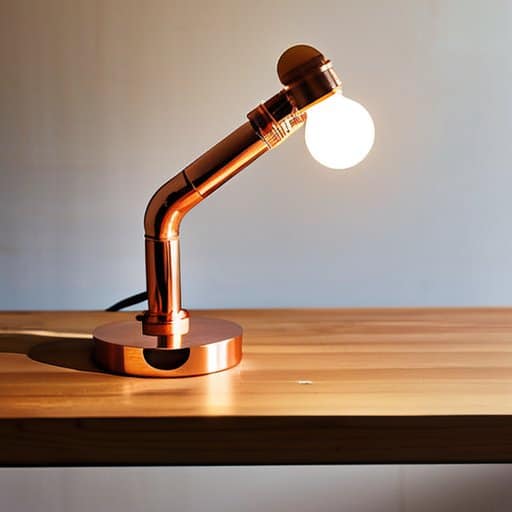
- Pick a pipe gauge that balances structural strength with that “industrial chic” vibe—usually ½‑inch works like a charm for most tabletop projects.
- Pre‑drill your bend points (or better yet, plan a gentle curve) before you start shaping; this prevents unsightly cracks and keeps the copper happy.
- Tame the wiring with heat‑shrink tubing or silicone sleeving—think of it as giving your lamp a sleek, space‑age armor.
- Seal every joint with high‑temperature silicone to keep moisture out and safety in, especially if you plan on a dimmer‑driven, cinematic glow.
- Add a dimmer switch or smart‑bulb controller so you can shift from “Nebula Night” to “Solar Flare” with the flick of a switch.
DIY Copper Pipe Lamp Quick Recap
Master the art of graceful copper bends to give your lamp that authentic steampunk flair.
Follow the simple wiring diagram to safely power your creation without a spark of confusion.
Personalize finishes—patina, Edison bulbs, or LED strips—to match your favorite sci‑fi aesthetic.
Crafting Light, One Copper Coil at a Time
“Turning a humble copper pipe into a lamp is like re‑engineering a star‑ship’s console—every bend, solder, and filament whispers the promise that even the simplest hardware can become a beacon of imagination.”
Ronald Morgan
Wrapping It All Up
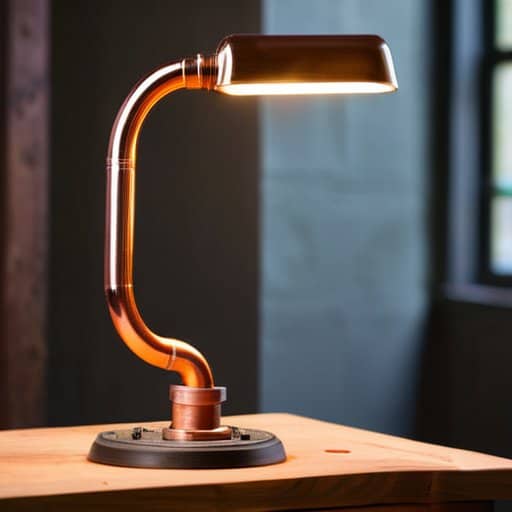
We’ve taken a raw length of copper, bent it into a graceful arc, drilled a snug opening for the bulb, threaded the wiring according to our simple diagram, and finished the piece with a polish that would impress any retro‑future set designer. By following the step‑by‑step guide—choosing the right gauge, mastering a soft‑bend without a kink, respecting electrical safety, and adding brass caps or reclaimed glass—you now have everything needed to craft a truly unique copper pipe lamp that glows with a steampunk vibe and functional flair. A quick safety test with a low‑voltage source ensures your new fixture shines both safely and spectacularly.
The real magic of this project isn’t just the warm amber glow that fills your room; it’s the confidence you gain when a handful of copper, a pinch of imagination, and a dash of solder become your own star‑ship console. Whether you hang it above a reading nook, mount it on a workshop wall, or gift it to a fellow maker, that luminous curve reminds you that everyday objects can be turned into sci‑fi artifacts with a little curiosity and a steady hand. So grab another pipe, sketch your next design, and let your workshop become the next chapter of tech‑adventure saga.
Frequently Asked Questions
Can I safely use LED strips instead of traditional bulbs in my copper pipe lamp without overheating?
You can swap the bulb for a strip of LEDs and stay in the ‘cool‑zone’ of your copper lantern. LED strips run at low voltage and generate a fraction of the heat of a filament bulb, so as long as you match the strip’s voltage to a proper 12 V (or 24 V) driver, respect its current rating, and leave a bit of airflow, you’ll avoid thermal surprise. Keep wiring tidy; you’ve got a futuristic glow without the furnace.
What tools do I really need to bend the copper pipe accurately without cracking it?
Think of yourself as the pilot of a copper‑clad starfighter. First, you’ll need a quality pipe bender or a hydraulic tube‑bending jig—your cockpit controls. A proper mandrel (or a wooden dowel that matches your pipe’s ID) keeps the tube from kinking, while a pipe brake helps with gentle arcs. A propane torch for an anneal, sandpaper, a ruler, marker, and safety glasses complete flight deck. With these tools, you’ll bend without cracking, ready for warp‑light glow.
How do I wire the lamp to be compatible with both 120 V home outlets and a 12 V USB‑C power source?
Here’s the trick that turns your copper‑pipe lamp into a Star‑Trek bridge console. Install a DP‑DT toggle switch that selects either 120 V AC (via a UL‑rated plug, fuse, and a lamp socket) or 12 V DC from a USB‑C PD buck‑converter. The DC side needs a bridge rectifier and 12 V regulator, then feed the LED driver you’ll use for mains. Keep the circuits isolated, add a fuse on each, label the switch “Mains/USB‑C,” and you’re ready for warp‑speed lighting!


Mission Control: How to Set Up a Desk for Long Hours Without Your Body Feeling Like a Glitch in the Matrix

Garden Organizer: Build a Rustic Potting Bench From Reclaimed Wood

A No-nonsense Guide to Resealing Your Bath Without the Sci-fi Level of Chaos
About The Author

Ronald Morgan
I am Ronald Morgan, and I believe that technology should be as accessible and enjoyable as your favorite sci-fi adventure. With a background deeply rooted in the innovation of Silicon Valley and a passion for storytelling, I strive to make sense of modern tech by blending technical expertise with a playful narrative. My mission is to demystify the digital world, turning complex concepts into engaging stories that ignite curiosity and empower you to explore the tech universe with confidence. Join me as we navigate this ever-evolving landscape, one whimsical reference at a time.