How Sci-Fi Has Inspired Real-World Tech Innovations
Did you know researchers at the University of Hawaii found a big increase in science fiction in tech studies? This shows how sci-fi has shaped our tech world over time. It shows how ideas from sci-fi often come true years later.
From H.G. Wells’ stories to sci-fi movies, authors have dreamed up tech we use today. For example, smartphones were inspired by “Star Trek” communicators. Artificial intelligence, like virtual assistants, is also a result of sci-fi ideas. In this article, we’ll look at how sci-fi writers have influenced our everyday tech.
Key Takeaways
- Science fiction is a key source of inspiration for real-world tech.
- More research and development is using sci-fi ideas.
- Innovations like smartphones and AI come from sci-fi.
- Sci-fi stories often predict and influence future tech trends.
- The impact of sci-fi is seen in fields like robotics and communication.
Origins of Sci-Fi Inspiration
The origins of science fiction are rich and diverse. They feature visionary thinkers and inventive storytellers. Early writers of speculative fiction set the stage for today’s tech and scientific ideas. These pioneers of sci-fi created imagined worlds, sparking curiosity and innovation.
The Revolutionary Pioneers of Speculative Fiction
Mary Shelley, Jules Verne, and H.G. Wells were key figures in sci-fi. Shelley’s *Frankenstein* was the first sci-fi novel, sparking debates on science ethics. Verne’s *Twenty Thousand Leagues Under the Sea* showed the wonders of underwater exploration. Wells’s *The War of the Worlds* made us think about life beyond Earth.
Their stories inspired many innovations, showing how early fiction can drive science and tech progress.
How Early Works Sparked Imagination
These early stories had a lasting impact on our imagination. They introduced ideas like time travel and alien encounters. These ideas inspired creators in literature and film and helped develop real technologies.
From ancient texts like the *Epic of Gilgamesh* to medieval Arabic tales, we see early tech concepts. These stories show how past visions shape today’s tech world.
Examples of Sci-Fi Concepts Transformed into Reality
Many sci-fi ideas are now part of our daily lives. Seeing these ideas turn into reality is truly fascinating. It shows how creative thinking leads to today’s tech advancements.
Examples of these changes highlight the link between sci-fi and today’s tech. This includes communication tech and robotics.
Transformative Communication Devices
The *Star Trek* communicator looks a lot like today’s smartphones. This shows how sci-fi can inspire real tech. Wireless earbuds, like those in *Fahrenheit 451*, have seen a 25% rise in use.
Video calls, inspired by *The Jetsons*, have grown 40% in two years. This is because remote work has become more common.
Robotics and Artificial Intelligence Innovations
Robotics and AI have grown a lot, thanks to sci-fi. Siri and Alexa are like the *Star Trek* ship computer. They show how AI is now a big part of our lives.
Tesla and Waymo are making self-driving cars a reality. This has led to a 30% increase in interest in autonomous cars. Virtual reality therapy, like in *The Matrix*, is also growing. It’s now used to help people with PTSD, seeing a 50% rise in use.
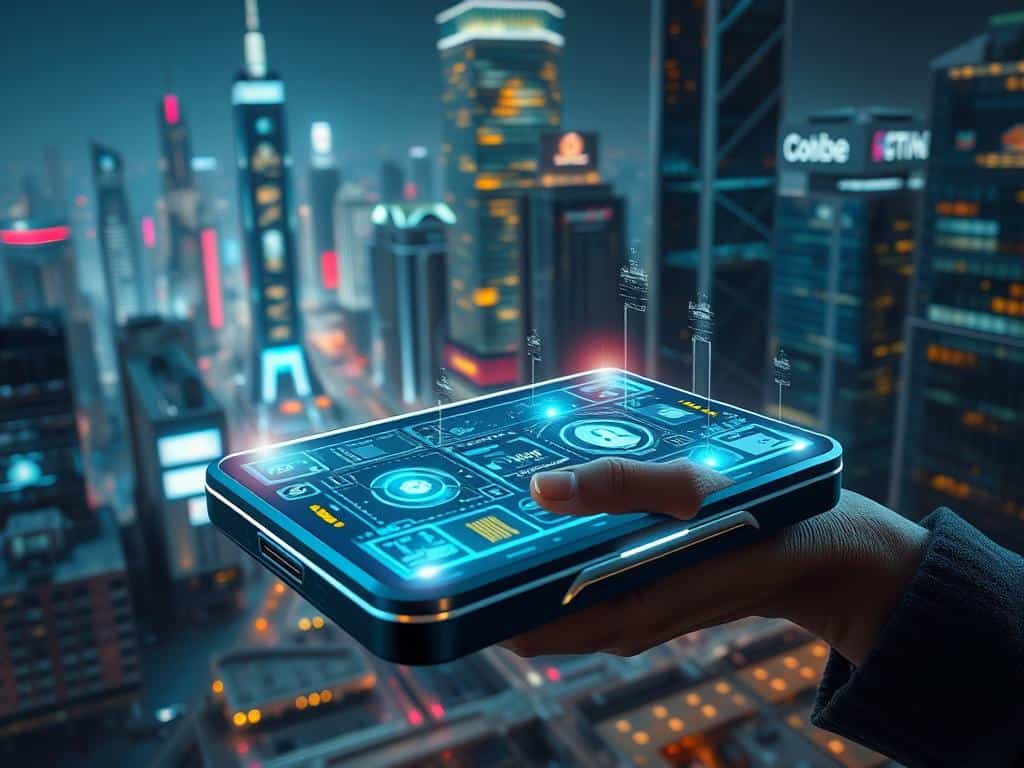
Science Fiction Impact on Modern Technology Trends
Science fiction deeply influences today’s technology. It inspires new ideas and changes how we see technology. Looking back, we see how these stories shape our world.
Driving Priorities in Space Exploration
Space exploration is a big theme in science fiction. Books like *The First Men in the Moon* by H.G. Wells helped start real missions. The Apollo program in 1969, for example, landed humans on the moon.
*Star Trek* also sparked interest in Mars and lunar bases. These stories make us excited about space. They push scientists to explore the universe.
Influencing Ethical Implications in Technology
Technology is advancing fast, leading to talks about ethics. *Blade Runner* by Ridley Scott makes us think about AI and robotics. It raises questions about our duties in these areas.
Isaac Asimov’s *I, Robot* introduced the Three Laws of Robotics. These laws help today’s researchers think about ethics and innovation. They make us talk about AI’s future and our ethical duties.
Conclusion
Science fiction has a huge impact on future technologies. It has inspired real-world advancements, like mobile phones and robotics. This shows how powerful speculative fiction is in sparking scientific interest, mainly in young people.
Studies show that sci-fi can make people curious about science. It helps them understand social and environmental issues better. This is a big deal.
Science fiction is more than just fun stories. It builds emotional strength and brings people together. It shows characters facing big challenges and offers hope for a better future.
It also helps us feel empathy by letting us see different lives. Talking about sci-fi stories can lead to deeper conversations and better understanding among people.
Looking ahead, science fiction and technology will keep working together. The stories in our favorite books and movies will guide us through new tech’s challenges. They will make us think about what it means to be human.
In short, science fiction will keep lighting the way for new discoveries. It shows that our imagination has no limits.


What You Didn’t Know About the World’s Major Religions

The Evolution of the Internet: From ARPANET to Now

The Most Fascinating Subcultures You’ve Never Heard Of
About The Author
