Astronomy 101: What Everyone Should Know About Space
Did you know over 700 exoplanets have been found outside our solar system? NASA says this shows how fast astronomy is growing. I’m excited to share the basics of astronomy with you, to help you understand the universe better.
Astronomy is for everyone, not just scientists. It has amazed people for centuries, from ancient sailors to today’s backyard telescope users. It’s about studying the universe, its structure, and the physics behind it. I want to make astronomy easy to understand and show you the wonders of space.
We’ll explore important astronomy topics together. We’ll cover our solar system and the latest discoveries in the universe. So, get ready to explore the universe like never before!
Key Takeaways
- Over 700 exoplanets have been discovered, showing how fast astronomy is growing.
- Astronomy combines many sciences to understand the universe.
- There are eight officially recognized planets in our solar system.
- Many people enjoy stargazing as a hobby, connecting with the cosmos.
- Modern tools help us study celestial bodies, like exoplanet atmospheres.
- Over 11,000 trained astronomers work on professional research in the field.
Introduction to Astronomy
Astronomy opens our eyes to the universe around us. It satisfies our curiosity about space and our place in it. It inspires and educates, driving science and tech forward. With each new find, we learn more about existence and our role in it.
Understanding the Universe Around Us
The universe is full of galaxies, stars, and planets. Each one tells a part of the cosmic story. By studying them, we see the universe’s vastness and details.
Tools like the Bortle scale help us find dark skies. These spots show the universe’s beauty, from dark to light-polluted areas.
Why Astronomy Matters
Astronomy is vital for our curiosity and exploration. It expands our scientific knowledge. With tech like smartphone apps, we can track the sky’s wonders.
Bright planets like Saturn and Jupiter spark interest. They make us want to learn more about space.
Brief History of Astronomy
Astronomy began with ancient civilizations. They used star maps for navigation and farming. Later, figures like Sir Isaac Newton changed how we see the sky.
Key moments like the Big Bang and telescope discoveries have shaped astronomy. Even cosmic events like exploded stars and Mars’ Valles Marineris canyon system amaze us all.
Astronomy Basics
Astronomy takes us on a journey through our solar system and its planets. These worlds are not just Earth but seven others orbiting the Sun. The history of finding planets is long, from ancient times to the 2006 change by the International Astronomical Union (IAU) on Pluto.
The Solar System and its Planets
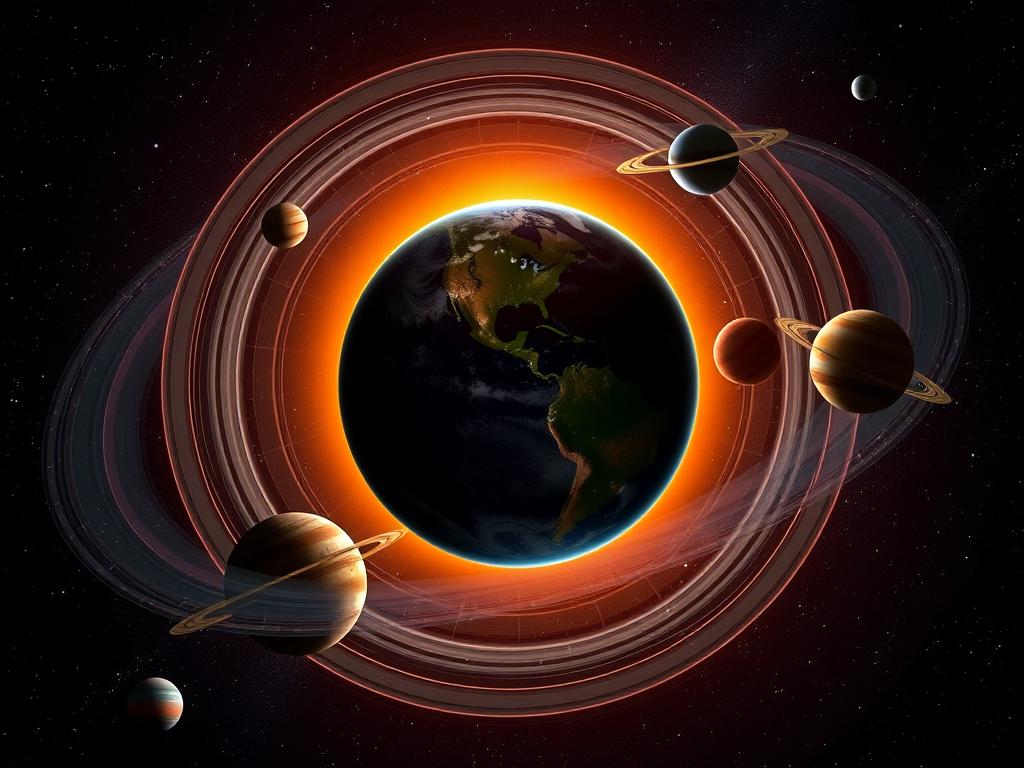
The solar system has eight main planets, each different in its own way. Mercury is hot, while Neptune is cold. Learning about their orbits, atmospheres, and surfaces helps us understand the universe better.
Understanding Celestial Bodies
Celestial bodies include stars, planets, moons, and asteroids. Stars form clusters in the sky, and planets orbit around them. The way these bodies move shows how complex and interesting the universe is.
Latest Discoveries in Astronomy
Astronomy is always changing, with new discoveries every day. Thanks to technology, scientists have found over 700 planets outside our solar system. Some of these planets might be like Earth, making us wonder if they could have life.
Stargazing: A Practical Guide
Stargazing is a great way to connect with the universe. To make the most of it, knowing the best practices and tools is key. Learning observing techniques can make watching the stars even more enjoyable.
Best Practices for Stargazing
Finding a good spot for stargazing is important. Look for places away from city lights to see the stars better. Places with less air pollution also help.
The best time to stargaze is early evening or late at night. This is when the sky is darkest. Before you start, give your eyes about half an hour to adjust. This makes it easier to see faint stars and movements.
Essential Tools for Every Stargazer
Using the right tools can make stargazing better. Binoculars and telescopes let you see planets and star clusters up close. For beginners, binoculars are a good start. More experienced stargazers might want a telescope.
Smartphone apps can also help. They guide you in finding constellations and other sky objects. These tools make it easier to see and capture the beauty of the night sky.
A star atlas is useful too. It helps you find constellations and track their movement. Exploring the 88 constellations, like the Plough, makes stargazing more fun. This guide is here to help you enjoy the universe.
Conclusion
Exploring the cosmos is more than just studying stars and planets. It helps us understand where we fit in the universe. From ancient Babylonians to Nicolaus Copernicus, each step has shaped our view of space. Their work has led to big leaps in technology, improving our lives and our grasp of the universe’s laws.
Space exploration is key to our progress. The universe is full of mysteries and chances. Every new find, like Edwin Hubble’s discovery or the James Webb Space Telescope’s work, changes how we see the world. Looking up at the stars, I feel connected to the long history of astronomy and its big impact on us.
We should all keep learning about the universe. There’s so much to see and discover, from watching the sky to reading about space. The universe is full of secrets waiting to be solved. Our search for answers can inspire and change how we see life.


The Life Lessons of History’s Greatest Philosophers

How the World’s Most Popular Languages Evolved

The Icons That Defined Entire Generations
About The Author
