The Tech Making Space Exploration Possible
Did you know NASA’s Artemis program wants to land humans on the moon by 2025? This shows how far space tech has come. For decades, satellites, rockets, and new technologies have helped us explore the universe. For 20 years, people have lived on the International Space Station, showing our dedication to space.
Looking up at the stars, we see the importance of teamwork. Students at Georgia Tech, SpaceX, and Lockheed Martin are key players. Their work leads to new discoveries and inspires future aerospace engineers.
Key Takeaways
- The Artemis program aims for a human moon landing in 2025.
- Cuts in costs and innovative solutions position the U.S. at the forefront of space exploration.
- Continuous advancements in rocket technology have led to more efficient and powerful engines.
- Innovative partnerships and hands-on experiences for students are vital in advancing space missions.
- Next-generation propulsion systems are set to revolutionize how we travel in space.
The Role of Advanced Rocket Technology
Modern space exploration relies heavily on advanced rocket technology. These new technologies have changed how rockets are made and work. Old rocket designs had big limitations, but now they’re better, thanks to new ideas.
Reusable rockets, like SpaceX’s Falcon 9, have made launching into space cheaper and more sustainable. This is a big step forward.
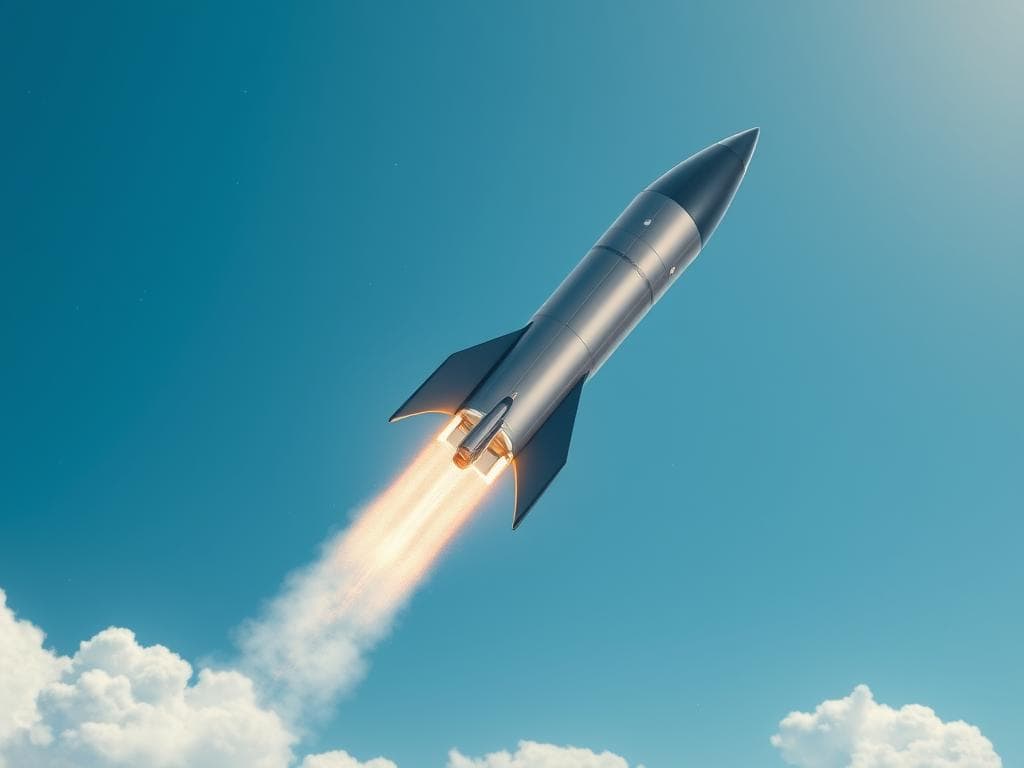
Transformations in Rocket Design
New materials and 3D printing have changed rocket design. These changes make rockets stronger and lighter. This leads to a new era of powerful and efficient rockets.
Reusable rockets have become the new norm. They cut down on waste and costs. Using new materials also makes production faster and cheaper, improving how much they can carry.
Next-Generation Propulsion Systems
New propulsion systems are key for the future of space travel. Old chemical propulsion has its limits, so scientists are exploring new options. This includes nuclear propulsion and ion thrusters.
These new systems could make space travel faster and more efficient. For example, nuclear propulsion could make trips to Mars much shorter. Ion thrusters can keep going for a long time, making long missions possible.
Innovations in Space Tech
New technologies in space exploration have changed how we see the universe. Robotics and automation are key in unmanned missions. They make operations more efficient and open doors for future discoveries.
Robotics and Automation in Space Missions
Robotic systems are essential for tasks humans can’t do. They are vital in exploring tough places like Mars. NASA’s Perseverance rover is a great example, using automation for landing and collecting data.
These unmanned missions reduce risks and gather important information. As we explore more, advanced robotics will help us understand space better.
Significance of Remote Sensing and Telescopes
Remote sensing and space telescopes are very important for learning about space. The Hubble and James Webb Space Telescopes have changed how we study the universe. They capture detailed images and data of distant galaxies and stars.
The Webb telescope has made big discoveries. It helps us understand how the universe formed and if there’s life elsewhere. New advancements in remote sensing will keep improving our knowledge of the cosmos.
Conclusion
The future of space exploration is all about new technology. We’re making big steps in rocketry, robotics, and sensing the universe. These advances help us understand the cosmos and also improve life on Earth.
For example, mining the moon for metals could change how we use resources. It could help us live more sustainably. This shows how space tech can benefit us here on Earth.
Looking to Mars and living in space for long periods is a big challenge. We need better ways to protect against harmful radiation and create closed systems for life. Growing food in space is also key to success.
Space exploration isn’t just about the stars. It also helps us grow food better, live more sustainably, and build stronger structures. This shows how space tech can improve our lives.
Seeing how space and Earth are connected helps us learn more about both. NASA’s Artemis program is a great example of how working together can speed up progress. It shows we’re serious about exploring space in a way that’s good for our planet.
In the end, space technology is not just about finding new things in space. It’s about making life on Earth better too. The future of space tech is full of promise for our planet.


The Original Global Network: Unlocking the Epic Sci-fi Adventure Hidden in the History of the Silk Road Trade Routes

Top 10 Unsolved Mysteries That Stil Puzzle Experts

The Inventors Who Changed the World Forever
About The Author
