What Rapid Population Growth Means for the Future
Did you know the global population hit 8 billion in November 2022? This is a huge jump from 2.5 billion in 1950. The United Nations predicts our numbers could reach 11 billion by 2100, mainly in poor areas like sub-Saharan Africa. This rapid growth is due to better health, longer lives, and high birth rates.
But this fast growth brings big challenges. It affects health, education, and fairness for all. It also impacts how we use resources and our efforts to protect the planet. We need to help communities, mainly women, and make sure they have access to health services. This is key for planning families and living sustainably.
Key Takeaways
- The global population soared to 8 billion in 2022, showing fast changes.
- Future projections suggest a possible peak nearing 11 billion by 2100, mainly in low-income areas.
- This growth poses significant sustainability challenges, affecting health, education, and gender equality.
- High fertility rates and increased longevity strain natural resources and urban infrastructure.
- Empowering women and improving reproductive health access is vital for managing population growth.
The Implications of Population Growth on Urbanization
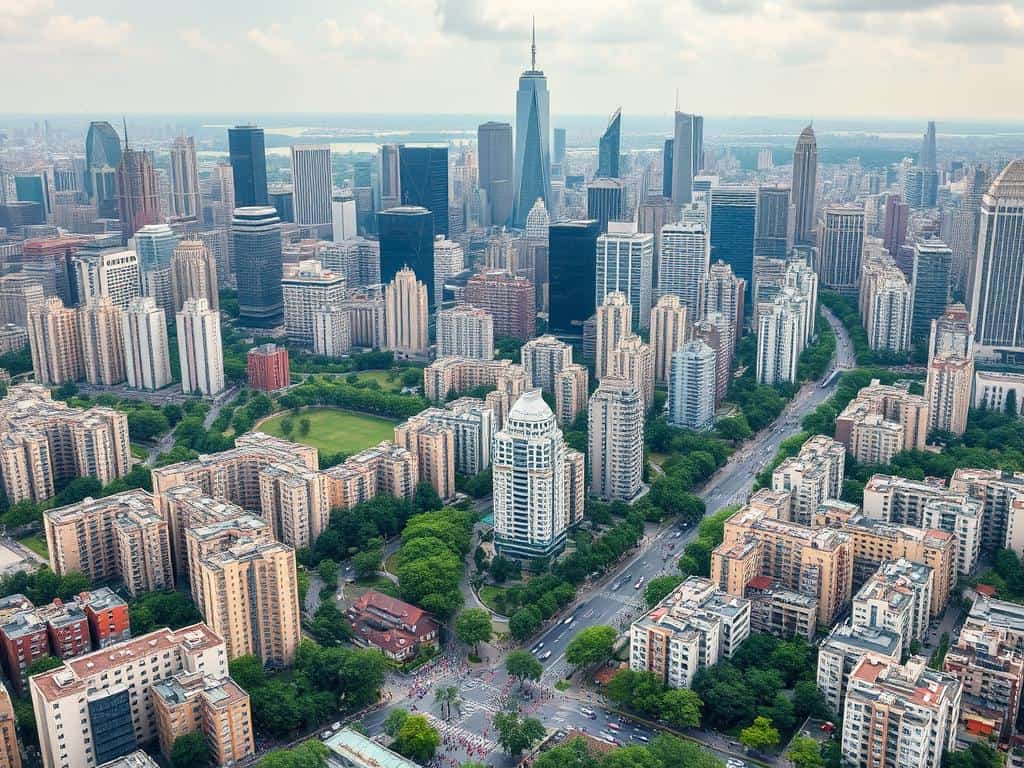
The world is seeing a big change in how people live, with more moving to cities. This is true, mainly in poorer countries. People go to cities for jobs, which means cities are getting busier and need more resources.
Urbanization Trends Driven by Population Growth
By 2050, the number of people living in cities will go up by 2.5 billion. Most of this growth will happen in developing countries. Cities are getting more crowded, and they need to grow their infrastructure to keep up.
Urban areas are getting bigger, but not fast enough to keep up with the population. Good planning is key to handle this growth. It’s important to improve public services for the growing number of people.
Challenges of Rapid Urbanization
Rapid growth in cities brings many problems. There’s not enough housing and too much pressure on transport. Cities often can’t provide enough safe water and sanitation.
Urban sprawl makes things worse, harming both people and the environment. To deal with the population increase, cities need new ways to improve life and protect the environment. This includes using sustainable practices in cities.
Population Growth and Its Impact on Sustainability
The world’s population keeps growing, which is a big problem for our planet. We need to understand how this growth affects our environment. The global population has tripled in the last 60 years, reaching almost 8 billion in 2022. It’s expected to hit almost 11 billion by 2100.
This growth puts a lot of pressure on our resources. We must focus on saving our planet and meeting sustainable development goals quickly.
Environmental Consequences of Increasing Population
More people mean more harm to our environment. We lose about 10 million hectares of land each year due to deforestation. This is because of the need for homes and resources.
Also, many species are disappearing. In the last 50 years, mammals, birds, and fish have seen a 68% decline. We need to act fast to protect our planet.
The link between more people and environmental damage is complex. Economic activities also play a big role in how much we consume and waste. Countries with higher incomes tend to use more resources, making climate change harder to tackle.
Strategies for Achieving Sustainable Development Goals
We need specific plans to meet our sustainable goals. Helping women get educated and plan their families can help lower birth rates. This can also break poverty cycles and create jobs.
Investing in health, education, and jobs can make a big difference. Using sustainable farming and saving natural habitats are also key. Switching to renewable energy is another important step to meet our growing energy needs.
These strategies can help us stay sustainable even as our population grows.
Conclusion
The world’s population is growing fast, bringing both challenges and chances. By 2050, we could see 9.2 billion people, which might put a strain on resources. But, if growth slows down, we might have more time to find new, sustainable ways to live.
We need new ways to manage our growing numbers. This means focusing on education, health, and fairness for everyone. It’s a big task, but it’s key to a better future.
Working together globally is critical. As more people move to cities, we must tackle urban issues and protect our planet. By working on these problems, we can make life better for everyone.
Our actions today will shape our future. We face big challenges like economic gaps and environmental harm. But, if we work together, we can create a fair and green world.


Amazing Geography Facts You Didn’t Learn in School

What You Didn’t Know About the World’s Major Religions
10 Bizarre Laws That Are Actually in Effect Around the World
About The Author
