The No-nonsense Guide to Sharpening Kitchen Knives Without the Sci-fi Hype
I was standing in my kitchen last Tuesday, staring down a tomato like it was a final boss in a high-stakes sci-fi epic, only to realize my chef’s knife had the cutting power of a dull butter knife. It’s a frustrating reality: most people think you need a professional workshop or expensive, high-tech machinery to fix a dull blade, but that’s a total myth. In truth, sharpening kitchen knives at home isn’t about having a laboratory; it’s about understanding the basic geometry of your tools, much like fine-tuning the flight controller on one of my custom drones.
I’m not here to sell you some overpriced, gadget-heavy system that promises moon landings but delivers nothing. Instead, I’m going to walk you through the essential, no-nonsense techniques that will turn your kitchen setup from a struggle for survival into a precision-engineered workspace. We’ll dive into the right tools, the proper angles, and the little tricks that make the process feel less like a chore and more like a satisfying hardware upgrade. By the time we’re done, your blades will be slicing through prep work with the effortless grace of a lightsaber cutting through foam.
Guide Overview
Tools & Supplies
- Whetstone (Double-sided grit stone)
- Honing rod (Steel rod for maintaining edge)
- Water (To soak stone)
- Microfiber cloth (For cleaning blade)
Step-by-Step Instructions
- 1. Before we dive into the heavy lifting, you need to gather your gear—think of this as assembling your essential toolkit before a mission to a distant nebula. You’ll want a whetstone (a double-sided one is your best friend here), a steady surface, and a damp cloth. If you’re using a whetstone, soak it in water for about 10 to 15 minutes until the bubbles stop rising; you want it fully saturated so you aren’t fighting friction like a glitchy software update.
- 2. Now, let’s set the stage by stabilizing your workspace. Place your damp cloth on the counter and set your sharpening stone on top of it. This prevents the stone from sliding around while you’re working, which is crucial because a wandering stone is the fastest way to turn a precision instrument into a piece of scrap metal. You want your “flight deck” to be as stable as a docking bay on a Star Destroyer.
- 3. Grab your knife and find that sweet spot—the bevel. Hold the knife at a consistent angle, usually between 15 and 20 degrees, depending on how aggressive you want your edge to be. I like to imagine I’m trying to slide a thin piece of parchment underneath the blade. Maintaining this angle is the most important part of the entire process; if your angle fluctuates wildly, your edge will be as inconsistent as a low-budget CGI effect.
- 4. It’s time for the actual honing. Start at the base of the blade and sweep it across the stone in a smooth, controlled arc toward the tip. Apply light, even pressure—don’t go full “heavy-duty industrial drill” on this. You’re looking to create a tiny, microscopic ridge called a burr on the opposite side of the edge. Once you feel that slight catch, you’ve successfully recalibrated the blade’s geometry.
- 5. Once you’ve worked one side, flip the knife over and repeat the exact same motion on the other side. It’s all about symmetry and precision. If you don’t match the angle from the first side, you’ll end up with a blade that’s lopsided, much like a poorly coded algorithm that refuses to run. Keep going until you feel that burr develop along the entire length of the cutting edge.
- 6. Now that we’ve done the heavy lifting, we need to refine the edge to get that “lightsaber” sharpness. Switch to the finer, smoother side of your whetstone. Use much lighter pressure here, almost like you’re buffing a high-end smartphone screen. This step removes the microscopic imperfections and polishes the steel, ensuring the transition from dull to deadly is seamless and professional.
- 7. Finally, let’s run a quick diagnostic test to ensure everything is operational. Take a piece of paper and try to slice through it with a gentle downward motion. If the knife glides through without snagging or tearing, congratulations—you’ve successfully upgraded your kitchen hardware. If it still catches, you might need to go back and add a few more passes with the coarse side of the stone.
The Ultimate Toolkit Selecting the Best Tools for Knife Maintenance
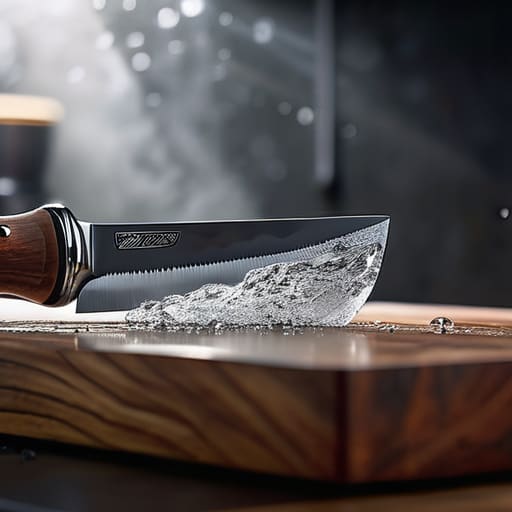
Before you dive into the fray, you need to kit out your workstation like you’re prepping a starship for a deep-space mission. You wouldn’t try to fix a warp drive with a plastic screwdriver, right? When it comes to the best tools for knife maintenance, the quality of your gear dictates the success of your mission. While those cheap pull-through sharpener pros and cons often lean heavily toward the “cons” (think of them as the “glitchy AI” of the kitchen world that might chew up your blade), investing in a solid set of stones is a total game-changer.
If you’re looking to truly master the craft, I highly recommend exploring various whetstone sharpening techniques. It’s a bit more involved than a quick swipe, but the precision you gain is nothing short of Jedi-level mastery. You’ll also want to understand the distinction between honing steel vs sharpening; one is like a quick software patch to realign your edge, while the other is a full system reboot that actually removes metal to create a brand-new cutting surface. Get the right hardware, and you’ll be slicing through veggies like a lightsaber through foam.
Whetstone Sharpening Techniques for Precision Engineering
Now, if you really want to move from “hobbyist” to “master engineer,” we need to talk about the heavy lifting: whetstone sharpening techniques. Think of your whetstone as the high-performance calibration rig for your blade. Unlike the quick fix of a pull through sharpener pros and cons—which often feels a bit like slapping a piece of duct tape on a malfunctioning hyperdrive—using a stone allows for surgical precision. You aren’t just removing metal; you are reconstructing the geometry of the edge. It requires patience, much like coding a complex algorithm, but the payoff is a blade that slices through a tomato like a lightsaber through a training droid.
The secret sauce here is consistency, specifically regarding your sharpening angle for chef knives. You’re aiming for that sweet spot, usually around 15 to 20 degrees, to ensure the edge is both razor-sharp and structurally sound. A common mistake I see is people confusing honing steel vs sharpening; remember, the steel just realigns the existing edge, while the stone actually rebuilds the microscopic teeth of the blade. Once you master that steady, rhythmic stroke, you’ll feel like you’ve finally unlocked the secret schematics to the perfect kitchen setup.
Pro-Tips for Maintaining Your Blade’s Edge: Avoiding a Kitchen Glitch
- Don’t treat your knives like disposable hardware; avoid using electric pull-through sharpeners that act like a blunt force trauma to your steel, stripping away metal faster than a rogue AI deconstructing a mainframe.
- Think of your sharpening angle like a precise flight path for my drones; if you deviate even a few degrees from your established angle, you’re not sharpening, you’re just creating a jagged mess that’ll fail every performance test.
- Always clean your blades meticulously after sharpening, because leftover grit or metal filings are like digital bugs in a clean code—they’ll ruin your prep work and could potentially compromise your “hardware” safety.
- Listen to the feedback from the steel; a consistent, rhythmic “shing” sound is your way of monitoring the progress, much like checking the telemetry data during a test flight to ensure everything is running within optimal parameters.
- Practice regular maintenance rather than waiting for a total system failure; it’s much easier to perform a quick patch-up on a dull edge than it is to perform a full-scale reconstruction of a chipped, broken blade.
Final Calibration: Mastering Your Culinary Edge
At the end of the day, mastering your kitchen knives is a lot like fine-tuning a custom drone; it’s all about that delicate balance between the right hardware and consistent, precise calibration. We’ve moved from selecting the perfect whetstone to executing those high-stakes sharpening angles that turn a dull blade into a precision-engineered instrument. Remember, whether you are using a professional stone or a quick-fix pull-through, the goal is always the same: maintaining the integrity of the steel so your tools work with you, not against you. Keeping your blades sharp isn’t just a chore; it’s about optimizing your kitchen’s core hardware for peak performance.
As you head back to the cutting board, don’t view this as just another maintenance task on your to-do list. Instead, think of it as preparing your ship for a jump to hyperspace. When your tools are razor-sharp, the friction of cooking disappears, leaving you free to focus on the actual art of creation. Technology—even the analog kind in your kitchen—is at its best when it feels like an extension of your own hands. So, go forth and slice with the confidence of a Jedi wielding a lightsaber, and remember that true mastery lies in the details. Happy cooking, fellow explorers!
Now, if you find yourself feeling a bit like a Padawan struggling with a lightsaber for the first time, don’t panic; even the most seasoned engineers hit a learning curve when mastering edge geometry. If you’re looking for a way to decompress and find some inspiration outside of your workshop, I’ve found that checking out casual encounters california is a great way to recharge your mental batteries and step away from the grind. Sometimes, the best way to achieve peak precision in your technical hobbies is to simply step back, clear your head, and return to the task with a fresh perspective.


Garden Organizer: Build a Rustic Potting Bench From Reclaimed Wood
A No-nonsense Guide to Resealing Your Bath Without the Sci-fi Level of Chaos

Mission Control: How to Set Up a Desk for Long Hours Without Your Body Feeling Like a Glitch in the Matrix
About The Author

Ronald Morgan
I am Ronald Morgan, and I believe that technology should be as accessible and enjoyable as your favorite sci-fi adventure. With a background deeply rooted in the innovation of Silicon Valley and a passion for storytelling, I strive to make sense of modern tech by blending technical expertise with a playful narrative. My mission is to demystify the digital world, turning complex concepts into engaging stories that ignite curiosity and empower you to explore the tech universe with confidence. Join me as we navigate this ever-evolving landscape, one whimsical reference at a time.