How to Fix Common Household Problems Without a Pro
It’s the weekend, and I’m looking forward to relaxing. But, the sink is leaking, and the lights flicker. I think about calling a professional, but then I remember all the DIY videos I’ve watched. I decide to fix these problems myself.
Doing it myself saves money and makes me feel accomplished. I learn that many repairs are easy to do. This boosts my confidence in handling home improvement tasks.
In the next sections, I’ll share tips on spotting problems early and fixing them. I’ll also talk about cost-saving repairs to keep your home in top shape. With some handy tips, you can handle everyday challenges without needing a professional.
Key Takeaways
- Many common household problems can be efficiently fixed by homeowners with a basic toolkit.
- Identifying issues early can prevent costly repairs down the line.
- Routine maintenance can safeguard your home and keep it comfortable.
- DIY repairs can significantly cut down on expenses associated with homeownership.
- Developing handyman skills can enhance your overall home improvement capabilities.
Understanding Common Household Issues
Spotting and fixing household problems early can save a lot of money. I’ve learned that catching issues early is essential for keeping my home in top shape. For example, a small leak can waste a lot of water over time, costing a lot.
By staying alert, I can stop these problems from turning into big headaches.
Identifying Problems Early
Regular checks and upkeep are vital for home improvement. Finding problems early helps catch small issues before they become costly repairs. Simple steps like checking plumbing, testing lights, or sniffing for odd smells can reveal a lot.
I always watch for signs. A dripping faucet or faulty wiring might mean a bigger problem that needs quick action.
Common Areas Needing Attention
Some parts of the home are more prone to issues. Kitchens and bathrooms need checks because of their plumbing, while outdoor spots can have problems with landscaping or drainage. Regular inspections help avoid damage and keep my home in good shape.
For complex tasks, like gas work or bathroom makeovers, I get help from experts. This ensures safe and effective fixes when needed.
Essential DIY Repairs for Common Issues
Doing DIY repairs can save you time and money. It lets homeowners fix common problems themselves. Whether it’s plumbing or flooring, knowing how to do it can improve your home.
Fixing Plumbing Problems
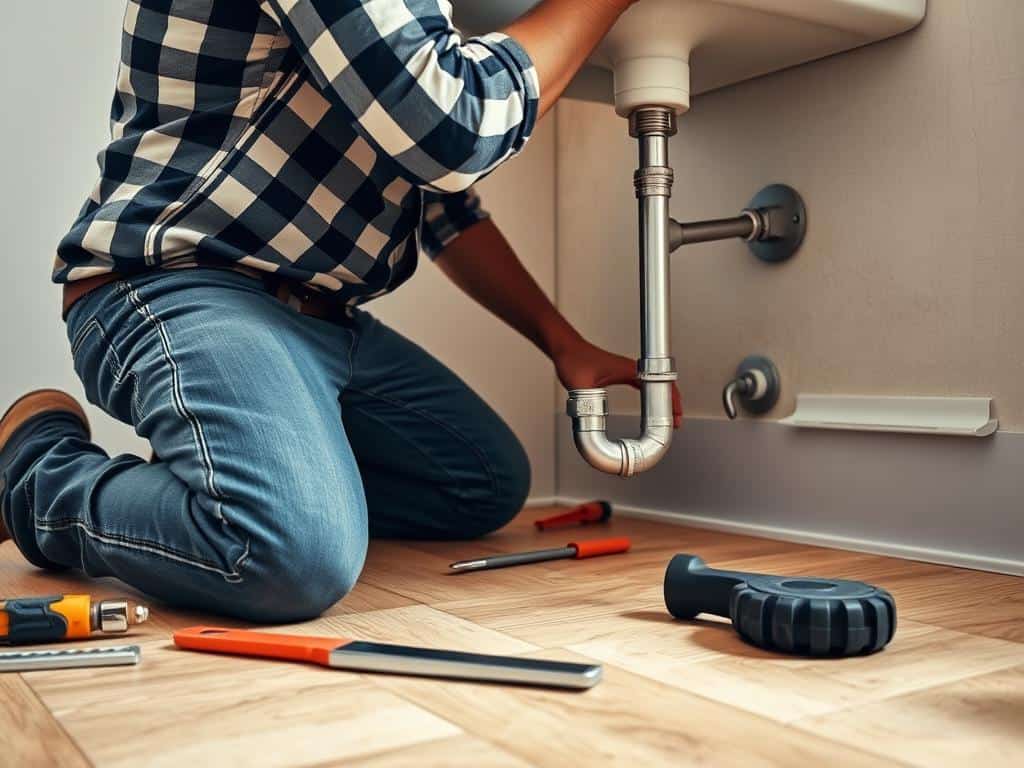
Plumbing issues can pop up anytime. But, with the right tools and tips, you can fix many problems yourself. Simple tasks like fixing a leaky faucet or unclogging a drain are doable.
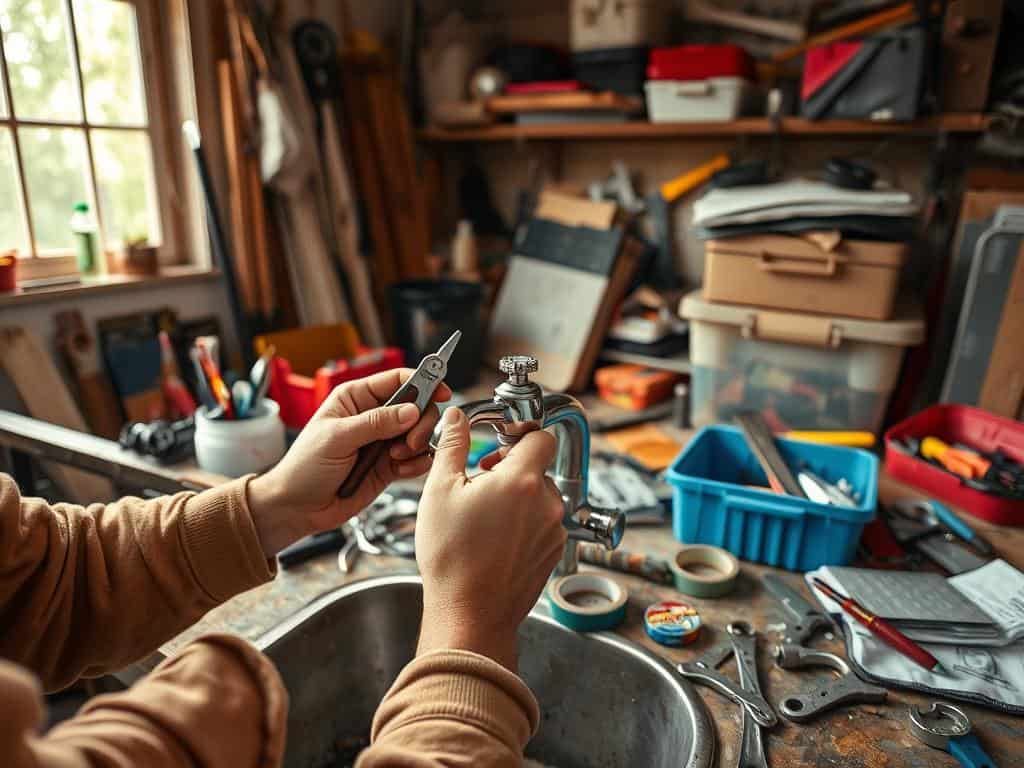
For a leaky faucet, check the O-rings and replace them if needed. Dealing with clogged drains? A plunger is often the first tool to try. I once had a tough clog, but using the plunger consistently fixed it.
Having good tools like an adjustable wrench and pliers makes repairs easier. These tools help you get the job done faster and better.
DIY Repairs for Flooring and Carpeting
Flooring repairs can also be done at home. Scratches on hardwood floors can be fixed with wood filler. For bigger damage, learning to refinish the floor can be rewarding.
Carpet stains need quick action. A carpet cleaner or a mix of water and vinegar can remove them. Having a DIY repair kit with a utility knife and duct tape is handy for these tasks.
Cost-Saving Repairs and Maintenance Tips
Managing home maintenance can seem daunting. Yet, taking proactive steps can significantly reduce costs over time. Regular upkeep avoids bigger issues and enhances comfort and value.
Setting aside 1% to 2% of your home’s purchase price each year for maintenance is wise. This means $3,000 to $9,000 annually for a $300,000 home. Dividing the 2% by 12 makes monthly savings easy to plan.
Regular Upkeep to Prevent Future Problems
Regular inspections help catch minor issues before they become expensive. For example, clean gutters prevent overflow and protect your home’s foundation. Simple tasks like sweeping debris from your roof or covering pipes in winter save money by avoiding leaks or frozen pipes.
These steps protect your property and ensure its longevity. They keep your home in top condition.
DIY Repairs to Save Money
DIY techniques can save a lot on home repairs. Buying materials directly often means better deals than installer markups. Doing maintenance tasks like draining the water heater annually improves efficiency and extends its life.
Investing in eco-friendly products, like WaterSense labeled toilets, saves money in the long run. It also helps the environment. These efforts enhance your home’s functionality and charm.
Conclusion
Understanding DIY repairs and home maintenance is key for homeowners. By learning basic handyman tips, I can handle common issues early. This approach saves money and makes my home more comfortable.
While I can fix many problems myself, some need a pro. Knowing my limits, like with plumbing or electrical work, is vital. This balance helps me keep my home in good shape without risking bigger problems.
Having handyman tips and strategies lets me take charge of my home. By always learning about repair and upkeep, I can keep my home welcoming for years.


Learn the Basics of Stock Investing and Build Wealth

Create an Eye-Catching Resume That Lands You Interviews

How to Eat Healthy Without Sacrificing Flavor
About The Author
